

×
ADVERTISEMENT

AUGUST 10, 2020

Dexamethasone With Ropivacaine Best for Open Cholecystectomy Pain

Originally published by our sister publication, Anesthesiology News

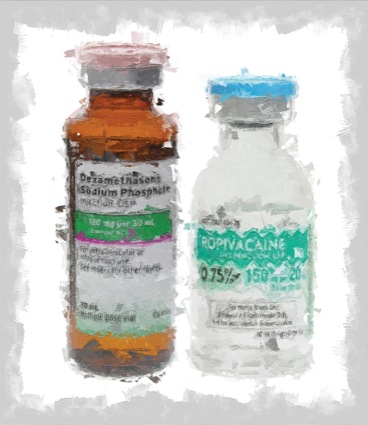
Although an oblique subcostal transverse abdominis plane (TAP) block with ropivacaine provides effective postoperative analgesia following open cholecystectomy, the addition of dexamethasone improves the quality of the block, a recent study has concluded.

{RELATED-HORIZONTAL}

The team of Indian investigators conducting the trial found that among other results, the combination of 0.75% ropivacaine and dexamethasone decreased total
Originally published by our sister publication, Anesthesiology News

Although an oblique subcostal transverse abdominis plane (TAP) block with ropivacaine provides effective postoperative analgesia following open cholecystectomy, the addition of dexamethasone improves the quality of the block, a recent study has concluded.

The team of Indian investigators conducting the trial found that among other results, the combination of 0.75% ropivacaine and dexamethasone decreased total tramadol consumption over 24 hours.
“Open cholecystectomy is a common procedure around the world,” said Shashi Kiran, MD, a senior professor of anesthesia at the Post Graduate Institute of Medical Sciences in Rohtak, India. “While the procedure is increasingly performed laparoscopically, conversion to the open procedure is nevertheless possible, and the open procedure can cause severe, sustained postoperative pain and significant morbidity for patients.”

Previous research demonstrated the efficacy of the oblique subcostal TAP block after upper abdominal surgery. “The addition of dexamethasone to local anesthesia has been shown to increase its analgesic efficacy and decrease postoperative opioid requirements, leading us to investigate the combination in these procedures,” Dr. Kiran said.

image

Tramadol Consumption Falls With Dexamethasone

To test the combination, the researchers enrolled 60 patients aged 20 to 50 years, with ASA physical status I to III, undergoing open cholecystectomy into a randomized double-blind trial. Following induction of anesthesia, participants underwent unilateral oblique subcostal TAP block with either 18 mL of 0.75% ropivacaine and 2 mL of normal saline (n=30) or 18 mL of 0.75% ropivacaine with 2 mL of dexamethasone (n=30).

“If the VAS [visual analog scale] score in the recovery room was more than 4, 1 g of paracetamol was given as the first rescue analgesic,” Dr. Kiran explained. “If the VAS was sustained above 4, then 50 mg IV tramadol was given as the second rescue analgesic. Then in the surgical ward, if pain persisted with a VAS greater than or equal to 4, then 100 mg intramuscular tramadol was given.”

The trial’s primary outcome was total postoperative tramadol consumption.

In a presentation at the 2019 annual meeting of the Canadian Anesthesiologists’ Society (abstract 616182), Dr. Kiran reported that total tramadol consumption was significantly lower in patients who received the TAP block with dexamethasone (P=0.009).

Similarly, the time to first tramadol request was significantly longer in patients who received the block with ropivacaine and dexamethasone than in those who received ropivacaine alone.

“Furthermore, the number of patients requiring first rescue analgesia was significantly less in the ropivacaine plus dexamethasone group,” Dr. Kiran said. “So, we believe that dexamethasone can be an effective adjuvant to local anesthetics or ropivacaine for postoperative TAP block. The results of our study are similar to prior studies in which dexamethasone added to local anesthetics was effective in controlling postoperative pain.”

Although the researchers were encouraged by the findings, the study had limitations, including the small population size. “We also could not assess the onset of sensory block as our patients all underwent general anesthesia,” Dr. Kiran noted. In addition, the investigators did not perform a dose-response analysis.

These shortcomings did not stop the researchers from endorsing the combination for the TAP block. “We believe dexamethasone is a useful adjuvant to ropivacaine in TAP block, and results in less postoperative analgesic consumption following open cholecystectomy,” she said.

“These blocks were all single shot, but obviously you’re looking at a procedure that can cause pain for a couple of days,” said session moderator Jonathan Bailey, MD, an assistant professor of anesthesia, pain management and perioperative medicine at Dalhousie University in Halifax, Nova Scotia. “Did you give any consideration to the placement of catheters?”

“That is always a possibility and would definitely be helpful,” Dr. Kiran replied. “Unfortunately, we don’t routinely place catheters in our institution.”

—Michael Vlessides


Drs. Kiran and Bailey reported no relevant financial disclosures.