

×
ADVERTISEMENT

AUGUST 23, 2023

Study Shows Music Therapy Effective For Acute Pain Management

Music therapy can be effective for acute pain management across various inpatient adult populations, according to results from a recent study.

Patients with moderate to severe pain, stress or anxiety treated at University Hospitals (UH) Connor Whole Health, in Ohio, reported clinically significant reductions in pain, stress and anxiety in response to a single session of music therapy. Furthermore, the clinically significant effect on pain was not influenced by patients’ demographic or
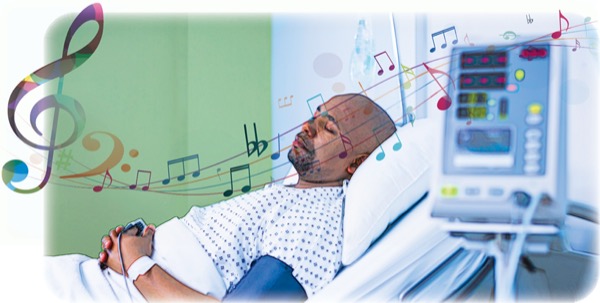

Music therapy can be effective for acute pain management across various inpatient adult populations, according to results from a recent study.

Patients with moderate to severe pain, stress or anxiety treated at University Hospitals (UH) Connor Whole Health, in Ohio, reported clinically significant reductions in pain, stress and anxiety in response to a single session of music therapy. Furthermore, the clinically significant effect on pain was not influenced by patients’ demographic or clinical characteristics.

In the retrospective study, researchers from UH Connor Whole Health examined music therapy interventions provided to 1,056 adults receiving inpatient medical care who reported presession pain, anxiety and/or stress scores greater than or equal to 4 on the 0-to-10 numerical rating scale. Patients’ hospital admissions (median length of stay, four days) were primarily for musculoskeletal (18.8%), cardiovascular (11.5%), general surgery (10.2%), respiratory (8.6%) or gastrointestinal/hepatic (7.5%) conditions. In addition, 376 hospital admissions (35.6%) included a mental health diagnosis in the patients’ electronic health records.

The focus of each music therapy session, including goals and interventions, was determined by the music therapist in a collaborative therapeutic relationship with the patient following an assessment of the patient’s coping skills, music preferences and symptoms. Music therapists provided interventions including live music listening, music-assisted relaxation and imagery, and active music making to address patients’ needs, including pain management, coping, and stress and anxiety reduction. As part of clinical care, music therapists assessed patients’ self-reported pain, stress and anxiety on a scale of 0 to 10 at the beginning and end of each session and documented their sessions in the electronic health records.

image

“We have seen within this study that patients experiencing 4/10 moderate to severe pain reported on average a 2.04-unit decrease post-session, which may augment their standard care plan. Our finding also revealed that this treatment has a clinically significant impact reducing stress, 3.48 units, and anxiety, 2.80 units, in this setting,” said study co-author Seneca Block, MT-BC, a PhD candidate and the Lauren Rich Fine Endowed Director of Expressive Therapies at UH Connor Whole Health.

Additionally, of the patients reporting a pain score greater than or equal to 4, 14% fell asleep during music therapy sessions—an important observation given the sleep challenges faced by patients with moderate to severe pain during hospitalization.

According to Block, research has demonstrated that reductions of at least 1.3 units on the numerical rating scale for pain are clinically significant for patients with noncancer pain. Reductions of at least 2 units in stress and anxiety are also considered clinically significant.

“Further research is required to draw intervention-specific comparisons; however, this evidence is inspiring,” Block told Pain Medicine News. “Music therapy is a clinically effective treatment for pain, stress and anxiety when implemented in the community hospital setting.”

Block said his group will now begin to investigate subpopulations and specific music interventions as they relate to outpatient care.

Unlike prior studies of music therapy—which have primarily been conducted at academic medical centers—the researchers said this is the first and largest investigation of the real-world effectiveness of music therapy within community medical centers.

Asked to comment on the study, Kyurim Kang, PhD, a postdoctoral research fellow and neurologic music therapist at the Johns Hopkins Center for Music and Medicine, in Baltimore, said the retrospective review study holds significant importance in light of the criticality of patient-reported outcomes and the pressing need for effective nonpharmacologic pain management strategies.

“The study’s multisite approach offers a comprehensive understanding of the factors and variables associated with pain reduction, which is an essential aspect of music therapy’s effectiveness,” Kang said. “Additionally, the study’s emphasis on investigating the variables associated with pain reduction further augments its significance. Overall, this study contributes significantly to the existing body of knowledge regarding nonpharmacologic pain management strategies and emphasizes the need for further research in this domain.”

However, he added that despite the promising findings of the study, further research is needed to gain a better understanding of the most effective types, frequency and length of interventions for individuals.

“As highlighted in the paper, a tailored approach to music therapy interventions could potentially enhance their efficacy in addressing pain management and other symptoms,” he said. “Therefore, there is a need for more rigorous research to identify the specific characteristics of music therapy interventions that can optimize patient outcomes. Such investigations could improve the delivery and outcomes of music therapy interventions and better support patient-centered care.”

Kang said assessing pain is a complex and challenging task due to its subjective nature, and that to gain a deeper understanding of the mechanisms underlying the effectiveness of music therapy in pain reduction, it may be useful to incorporate physiologic responses in music therapy studies.

—Kate O’Rourke


Block and Kang reported no relevant financial disclosures.

Related Keywords