

×
ADVERTISEMENT

NOVEMBER 25, 2022

Can Managing Acute Inflammation With Analgesia Spur Chronic Pain?


Originally published by our sister publication Anesthesiology News

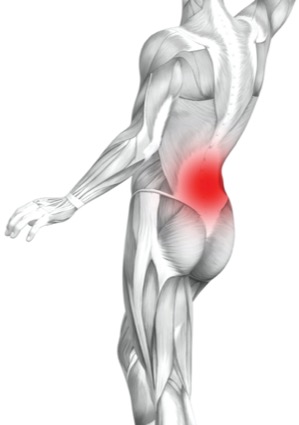
Despite the analgesic effect early in the acute pain process, treatment of acute inflammation may actually worsen long-term outcomes in people with low back pain (LBP).

A recent study (Sci Transl Med 2022;14[644]:eabj9954) found that neutrophil activation–dependent inflammatory genes were actually upregulated at the acute pain stage in individuals with resolved pain, in contrast to no changes in those with persistent pain.


Originally published by our sister publication Anesthesiology News

Despite the analgesic effect early in the acute pain process, treatment of acute inflammation may actually worsen long-term outcomes in people with low back pain (LBP).

A recent study (Sci Transl Med 2022;14[644]:eabj9954) found that neutrophil activation–dependent inflammatory genes were actually upregulated at the acute pain stage in individuals with resolved pain, in contrast to no changes in those with persistent pain. Indeed, clinical data suggested the use of anti-inflammatory drugs was associated with increased risk for persistent pain, a finding the researchers said indicates that anti-inflammatory treatments might have a negative effect on pain duration.

“Scientists have long recognized that there seems to be a link between acute and chronic pain,” said Luda Diatchenko, MD, PhD, a professor of dentistry and medicine at McGill University, in Montreal. “While the overwhelming majority of people either heal or experience relief after acute pain or injury, sometimes people don’t. The question, of course, is why.

“In addition, there’s more and more evidence to show that acute and chronic pain are actually different beasts with different pathophysiological processes,” she added. “It’s easy to think that chronic pain is just acute pain that continues in terms of pathophysiology, but that doesn’t seem to be the case.” In the current study, she and her colleagues investigated the pathophysiologic mechanisms underlying the transition from acute to chronic LBP.

img-button

Differences in Transcriptional Changes

The researchers studied 50 patients whose LBP resolved and 50 with persistent pain. The primary objective was to investigate associations between genome-wide transcriptomics and the development of chronic low back pain in those who developed chronic pain symptoms three months after an episode of acute LBP. Clinicians followed a standardized protocol for treating acute LBP with both nonsteroidal anti-inflammatory drugs (NSAIDs) and systemic steroids, plus opioids if the pain was severe or impaired daily activity.

In 98 evaluable patients, the researchers found marked differences between the two groups in terms of the transcriptional changes they experienced. Indeed, there were no differentially expressed genes that reached genome-wide statistical significance between patients whose pain resolved and those in whom it became persistent at the initial visit. At the first follow-up, however, comparing gene expression between the two visits in persistent pain patients identified no differentially expressed genes, while in patients whose pain resolved more than 5,500 genes were differentially expressed.

As Diatchenko discussed, these analyses suggest that patients with pain resolution experience an abundance of active biological processes underlying recovery, processes that are driven in part by changes in blood cell composition.

“This finding was very unexpected,” Diatchenko told Anesthesiology News. “Previously, it was believed that the transition to chronic pain was the product of unique pathological processes or genetic activity that therefore needed to be inhibited. In fact, however, we saw the opposite: There are hundreds of thousands of events occurring in people who resolve their pain, and it’s these processes that allow people to heal. Healing, then, is an active biological process.”

The researchers then analyzed biological pathways instead of individual differentially expressed genes. They found that transient neutrophil-driven upregulation of inflammatory responses was actually protective against the transition to chronic pain.

“As expected, many biological pathways were underlying patients’ healing,” Diatchenko noted. “But the one with the most impact was inflammation, which was driven by neutrophil activation and degranulation.”

This finding, she continued, proved equally surprising to the researchers. “In people who resolve their pain, the initial inflammatory response is high,” Diatchenko said. “But by three months, it abruptly went down. So, they had a peak of inflammation, which then fell quite sharply. It almost seems as though this peak is necessary for the inflammation—and the pain—to be resolved.”

Temporomandibular Joint Pain Another Example

The investigators then sought to replicate the findings in an independent prospective cohort of patients with temporomandibular joint disorder. Once again, the researchers found that patients whose pain resolved showed a significantly higher inflammatory response at the acute stage than those whose pain persisted. Similar patterns were observed for neutrophil activation and degranulation pathways.

In a third part of the study, a series of murine pain assays demonstrated that although early treatment with a steroid or NSAID offered short-term analgesia, it ultimately led to prolonged long-term pain, a finding that was not observed with any other form of analgesic.

This led the investigators to examine the relationship between analgesic drug use and back pain in a large human study. They hypothesized that anti-inflammatory agents may interfere with the natural recovery process, thereby increasing the chances for chronic pain. They found that people with acute back pain were at 1.76-fold greater risk for developing chronic back pain if they reported NSAID usage (P=0.00002) than if they were not taking these drugs. Interestingly, no other analgesic medication category showed this association with the development of chronic back pain.

Given these findings, the researchers said the management of acute inflammation may be counterproductive for good long-term outcomes in LBP sufferers.

“First, we need to be careful when and how we use NSAIDs or dexamethasone,” Diatchenko said, “because we’re not allowing the peak of inflammatory response to evolve. Secondly, and maybe more importantly, we need to be cognizant of how we help patients through the inflammatory peak and upregulate adaptive immune responses. With that in mind, things that trigger a systemic response of immune systems—such as physical therapy, acupuncture and physical exercise—are likely better for preventing the transition from acute to chronic pain prevention.”

The Paradigm Has Shifted

Thomas Buchheit, MD, the director of regenerative pain therapies at Duke University, in Durham, N.C., called the research “paradigm shifting” and believed it will change the conversation about the treatment of acute pain.

“I think we have falsely extrapolated our data on chronic inflammation to those in the acute setting,” he said. “We’ve assumed that because chronic inflammation is bad, all acute inflammation is therefore also harmful.

“But this paper is exceptionally well-done translational scientific work, and really refutes that knee-jerk reflex that we’ve had for decades,” Buchheit continued. “While certain anti-inflammatories or a single steroid shot may not do harm for acute pain, I believe that repeated use of these medicines impairs the healing cascade.”

Despite the strength of the findings, Buchheit acknowledged that the study will likely spur a healthy amount of skepticism, “and I think that’s appropriate,” he said.

“The one question that remains is whether there’s a tipping point,” Buchheit noted. “For instance, there is a tremendously robust inflammatory response to a surgical insult. But is there a point at which that inflammatory response is too much? If that’s the case, there may be a role for anti-inflammatories in the postoperative period. There might be a scenario where a course of anti-inflammatories is appropriate, for example, either after surgery or after an acute injury. But I suspect strongly that it’s time-limited, and there’s a big difference between taking them for three days versus three months.

“Either way, I think this sets the stage for a very appropriate randomized controlled trial,” he said.

—Michael Vlessides


Buchheit reported no relevant financial disclosures. Diatchenko reported financial relationships with Ono Pharma USA, Orthogen AG and Releviate.

Related Keywords