

×
ADVERTISEMENT

OCTOBER 6, 2025

Chronic Pain After Inguinal Hernia Repair Is Treatable


Originally published by our sister publication General Surgery News

By Michael Vlessides

LONG BEACH, Calif.—Addressing chronic pain following inguinal hernia repair is as much about communicating with patients as it is about the surgeon’s clinical insight and expertise, according to David M. Krpata, MD, a general surgeon at Cleveland Clinic. At the 2025 Society of American Gastrointestinal and Endoscopic Surgeons Annual Meeting, Dr. Krpata discussed his algorithm for treating such


Originally published by our sister publication General Surgery News

By Michael Vlessides

LONG BEACH, Calif.—Addressing chronic pain following inguinal hernia repair is as much about communicating with patients as it is about the surgeon’s clinical insight and expertise, according to David M. Krpata, MD, a general surgeon at Cleveland Clinic. At the 2025 Society of American Gastrointestinal and Endoscopic Surgeons Annual Meeting, Dr. Krpata discussed his algorithm for treating such pain, which he tailors according to several factors.

When patients present with nociceptive pain; have limited relief from diagnostic nerve injections; and imaging reveals a meshoma, or folding of the mesh, Dr. Krpata opts for mesh removal as the primary intervention.

In cases of neuropathic pain, where there is a complete but transient response to nerve injection and the pain distribution aligns consistently with dermatomal mapping, he proceeds with a neurectomy.

If symptoms include nociceptive and neuropathic pain, with partial relief from nerve injections, evidence of mesh irregularity on imaging and semi-consistent dermatomal mapping, Dr. Krpata performs a combination of mesh removal and neurectomy.

image
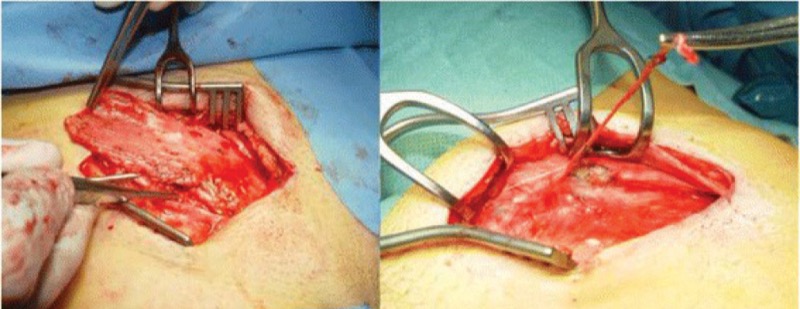
Mesh removal (left) vs. neurectomy (right).

When the clinical picture suggests atypical pain, with a time lag between surgery and symptom onset, inconsistent dermatomal mapping, and normal imaging, he recommends against surgical intervention, instead considering conservative management.

“That said, I think a simple algorithm for managing these patients is a gross oversimplification,” Dr. Krpata said. “I typically look at this as more of a surgical decision-making matrix.” His matrix includes the following concepts:

  • the three R’s;
  • impact of chronic pain on patients’ quality of life versus risk of intervention;
  • medications;
  • the psychological nature of pain; and
  • surgery as an option to address pain.

The first step in the matrix is the three R’s: Reassurance, Rule out recurrence and deRmatomal mapping. Clinicians first need to reassure patients that whatever is hurting them is not necessarily harming them. Dr. Krpata will also fix recurrences as necessary; if they recur, he initiates the pain-treatment algorithm from the beginning. Dermatomal mapping allows him to opt for more selective treatment approaches.

Next, Dr. Krpata assesses how chronic pain may impact patients’ quality of life. If the pain has little impact on daily activities, a risky operation—such as mesh removal—likely doesn’t make sense.

Medications are another option, and include duloxetine, gabapentin and pregabalin. In each case, he said these agents need to be given a “fair trial,” which means continuing to a higher dose if a lower one proves inadequate.

No matter the treatment, pain is more complicated than most clinicians think. As such, Dr. Krpata urged fellow clinicians to consider patient psychology, which can play a significant role in pain genesis and treatment. “These puddles run a lot deeper than you might realize,” he noted.

Finally, he reminded his audience that surgery is always an option. Indeed, he stressed that every piece of mesh can ultimately be removed, though surgeons need to weigh risks and benefits before deciding if patients should undergo surgery for chronic inguinal pain.

As Dr. Krpata concluded, effective chronic-pain management after inguinal hernia repair begins with patient-centered dialogue and ends with a tailored approach that respects the complexity of pain.


Dr. Krpata reported no relevant financial disclosures.

Related Keywords