

×
ADVERTISEMENT

FEBRUARY 1, 2024

Early Nerve Intervention Reduces Post-op Pain After Amputation

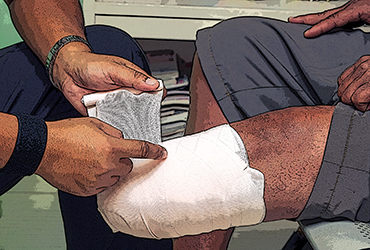
According to a recent study, targeted muscle reinnervation (TMR), a procedure in which residual nerves from an amputated limb are transferred to new muscle targets, may prevent phantom limb pain and residual limb pain among amputees.

“Providing a target for the nerves at the time of amputation can prevent the development of neuropathic pain and ultimately increase quality of life for patients living with major limb amputation,” study researcher Amy M. Moore, MD, a professor and the


According to a recent study, targeted muscle reinnervation (TMR), a procedure in which residual nerves from an amputated limb are transferred to new muscle targets, may prevent phantom limb pain and residual limb pain among amputees.

“Providing a target for the nerves at the time of amputation can prevent the development of neuropathic pain and ultimately increase quality of life for patients living with major limb amputation,” study researcher Amy M. Moore, MD, a professor and the chair of the Department of Plastic and Reconstructive Surgery at the Ohio State University Wexner Medical Center, in Columbus, told Pain Medicine News.
The study included 103 patients (105 limbs) who underwent limb amputation between 2015 and 2020 (73 acute TMR limbs and 32 delayed TMR limbs) (Plast Reconstr Surg 2024;153[1]:154-163). More patients in the delayed TMR group had recurrent pain compared with those in the acute TMR group (19% and 1%, respectively; P<0.05). Although more final follow-up pain surveys were completed by patients in the acute TMR group than in the delayed group (85% vs. 69%, respectively), acute TMR patients reported statistically significant lower phantom limb pain Patient-Reported Outcomes Measurement Information System (PROMIS) pain interference scores and residual limb pain PROMIS pain intensity scores.

“Our hope is that surgeons performing amputations collaborate with nerve specialists in order to provide the best possible outcomes for their patients,” Moore noted.

The researchers said they aim to continue their work by identifying patterns and potential biomarkers that will indicate which amputees are most at risk of developing chronic pain.

“It is an exciting time, as we are seeing advances in surgery that cannot only treat but can also prevent neuropathic pain in our patients. This is life-changing,” Moore concluded.

—Myles Starr

Moore reported no relevant financial disclosures.


Related Keywords