

×
ADVERTISEMENT

MAY 5, 2025

How Wearable Technology Could Shape the Future of Anesthesia Delivery


Originally published by our sister publication Anesthesiology News

Wearable technology appears ready to transform anesthesia care for patients and their providers, according to medical device experts.

Of note, consumer-grade wearable technology can offer increased patient-specific perioperative data for anesthesiologists, helping to improve postoperative outcomes with minimal narcotic use, Mohamed Rehman, MD, the chair of the Department of Anesthesiology at Johns Hopkins All Children’s

Originally published by our sister publication Anesthesiology News

Wearable technology appears ready to transform anesthesia care for patients and their providers, according to medical device experts.

Of note, consumer-grade wearable technology can offer increased patient-specific perioperative data for anesthesiologists, helping to improve postoperative outcomes with minimal narcotic use, Mohamed Rehman, MD, the chair of the Department of Anesthesiology at Johns Hopkins All Children’s Hospital, in St. Petersburg, Fla., said during a presentation at the 2025 annual meeting for the Society of Technology in Anesthesia.

Rehman explained that wearable technology could shift patient care from “herd medicine” to “precision medicine,” emphasizing the power of digital technology in achieving this transformation.

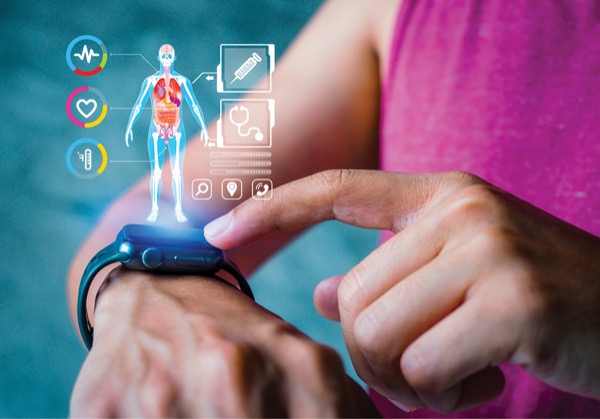
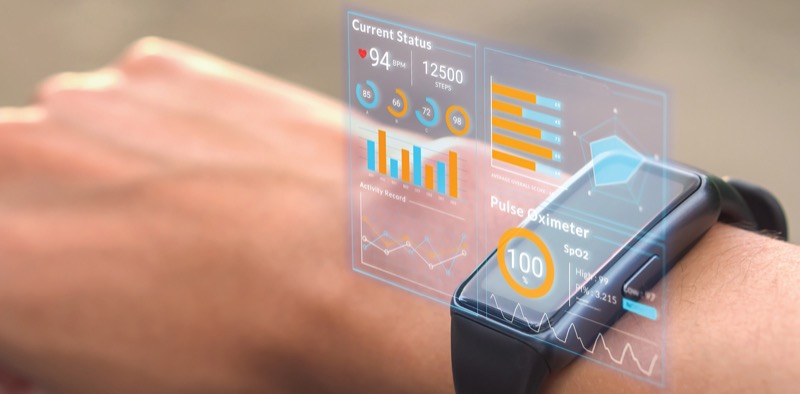
Wearable technology refers to devices worn on the body that collect data about an individual’s physiology. In nonclinical settings, the most common wearables are smartwatches, which track heart rate, body temperature and mobility. However, Rehman pointed out that other consumer-facing wearables—such as rings, glasses, garments and skin patches—are entering the market.

image

While these devices are commonly used by athletes or health-conscious individuals, Rehman, also the Eric Kobren Endowed Chair in Applied Health Informatics at the Johns Hopkins University School of Medicine, in Baltimore, highlighted their potential to have a significant impact on anesthesia care.

For example, Rehman shared an anecdote about one of his patients who recently underwent spinal surgery. After the patient returned home, they noticed their heart rate was consistently higher than usual. Rehman’s team brought the patient in for further evaluation, and she was eventually diagnosed with COVID-19–related myocarditis. This early detection was made possible using a smartwatch.

“The heart rate was a very early predictor showing COVID myocarditis,” Rehman told Anesthesiology News. “We would have diagnosed it over time, but not that early.”

Kevin Sexton, MD, the vice chair for Innovation in Surgical Sciences at Vanderbilt University Medical Center, in Nashville, Tenn., agreed that wearable technology is poised to transform the patient–provider relationship in a meaningful way.

“What I ultimately think wearables are doing is empowering a conversation between patients and providers with more granular information than we’ve ever had previously,” Sexton said.

Sexton, who delivered a presentation on novel monitors for dehydration and hemorrhage at the meeting, explained that smartwatches can establish a health baseline for patients’ heart rate and mobility data. The current state of consumer wearables already provides anesthesiologists these patient-specific data that can be used to monitor recovery times for their patients.

However, Rehman and Sexton both acknowledged significant challenges in implementing wearable technology in clinical settings, including limited adoption by healthcare providers and a lack of proven medical-grade options.

Lagging Adoption and Regulation

Wearable devices have been popular among consumers for more than a decade, but the technology has not yet gained widespread use in clinical settings, Sexton noted.

“To create something that’s sustainable and that penetrates the market, we have to move from those innovators and early adopters into the early majority,” he said.

As wearable technology gains broader public acceptance, it will likely improve patient care. Sexton noted that adoption could increase by demonstrating how wearable devices help consumers manage their health and communicate more effectively with their healthcare providers.

image

“We have to not only have a device that works, but we have to have a device that facilitates meaningful communication between patients and clinicians,” he said.

Another barrier will be finding ways to show healthcare providers how the technology can fit into their workflow and improve their ability to manage a patient’s health.

For this to occur, Sexton explained that wearable device companies will need to find a way to translate data from these devices in an understandable clinical context. For example, if wearable technology companies can translate clinical inputs, such as heart rate and blood loss, into simple and actionable outputs for a rate of blood loss, it could improve physicians’ clinical decision-making and their ability to care for patients.

Sexton added that breaking through that barrier would likely improve the rate of acceptance as well.

Rehman explained that redefining the role of wearable technology in clinical settings will be another way to improve the adoption of this technology among healthcare providers. For example, different smartwatch brands have been shown to provide different measures of the same person’s heart rate and mobility data, but Rehman explained that these differences do not mean they’re unreliable for clinical purposes.

“Wearables are a trending monitor, not a medical-grade decision-making monitor,” he said, adding that “over time, there’s going to be a merger of technologies, which means every variable will have medical-grade monitoring.”

Although current wearables aren’t yet medical grade, Rehman pointed out that they can still track a patient’s health trends if they consistently use the same device. In the future, most wearable devices will likely undergo the FDA approval process to ensure health data accuracy.

“Today, they’re trending monitors,” Rehman said. “Tomorrow, they’re going to be medical-grade monitors.”

Creating the Digital Twin

Rehman explained wide adoption of this technology will eventually open the door to a long-sought goal in patient care: the creation of the digital health twin. While the digital twin is commonly used in business to describe an individual’s virtual, dynamic and up-to-date replica, Rehman explained that a digital twin in healthcare is more than a digital model of a patient’s health data.

“There’s so much confusion in terminology to create a digital twin,” he noted.

Rehman explained that the National Academies of Science, Engineering, and Medicine (NASEM) has developed the gold-standard definition for the digital twin, which describes it as a set of digital information that dynamically updates with data from the human.

The NASEM definition also emphasizes that “the bidirectional interaction between the virtual and the physical is central to the digital twin” and this twin must have predictive capability that informs decision-making.

Rehman explained that many attempts to use wearable devices to create digital twins fall short of this two-way exchange of information.

“If it is just flow of data to a repository, it’s not a digital twin,” Rehman said. “It’s a data model.”

Creating a true digital twin requires a verification process known as the verification, validation, uncertainty quantification process. Rehman emphasized that any system producing a digital twin must undergo this process to ensure accuracy and efficacy.

By adhering to these regulations, Rehman believes a true digital twin could provide healthcare professionals with real-time patient data, improving clinical decision-making and, ultimately, patient outcomes.

If wearables help create a world with robust digital twins for every patient, Rehman said “the whole concept of an annual visit may go away.”

In perioperative medicine, anesthesiologists will use patient-specific data trends to inform procedures and postoperative recovery plans, which will be monitored in real time by their wearable devices.

Rehman emphasized that this approach to perioperative patient management will only be possible with FDA-approved wearable technology.

“It is going to be a foundational cornerstone of the digital twin,” Rehman said.

Opening a Digital Divide

While the technology behind wearable devices has the potential to revolutionize patient–provider relationships, Sexton has some concerns about uneven adoption and implementation of the technology.

He explained that financial consideration around implementing the technology into existing healthcare workflows could prevent lower resourced health systems from adopting the technology.

“Wearable technology tends to be more available in high-resource environments, so urban and academic environments, and less available in under-resourced environments, thinking rural or nonurban,” Sexton said. “I think we’re seeing a digital divide starting to worsen in this area.”

Although consumer wearables are widely available, Sexton pointed out that healthcare systems must develop processes to integrate wearable data into their workflow, including electronic medical records, data storage and analysis.

“It’s not so much the device as it is how you integrate that in a clinician’s workflow, getting that information into the electronic medical record, storing the information, analyzing the information, creating new data streams, training folks to use new data.”

This concern could limit the benefit of wearable technology for patients and providers, but Sexton noted there is still potential in the industry for improving healthcare delivery to patients nationwide.

“We’re in a transformative period, and I think what we’re used to and what we’re seeing more are monitors that are being sold to hospital systems, but what we’re going to see is that patient-specific conversations start to change,” Sexton said.

By Michael DePeau-Wilson


Rehman reported no relevant financial disclosures. Sexton reported financial disclosures for licensed intellectual property owned by Vanderbilt University Medical Center and the University of Arkansas for Medical Sciences. He reported advising for Decisio Health, Doximity, hDrop Technologies, Hoopcare, Qventus and Stephens Insurance. He also reported receiving funding from the Department of Commerce, National Center for Advancing Translational Sciences, National Institute of General Medical Sciences and National Institute of Nursing Research, and Substance Abuse and Mental Health Services Administration.

Related Keywords