

×
ADVERTISEMENT

FEBRUARY 14, 2024

Cellular Transformation Implicated in Discogenic Back Pain

Degeneration of intervertebral discs (IVDs) is painful as cells of the inner disc transform to a subtype that is susceptible to or promotes infiltration of neurons from surrounding tissue, according to new in vitro and animal model investigations.

“We’ve identified for the first time particular cells that could be the key to understanding disc pain,” Dmitriy Sheyn, PhD, an assistant professor at the Board of Governors Regenerative Medicine Institute at Cedars-Sinai Medical
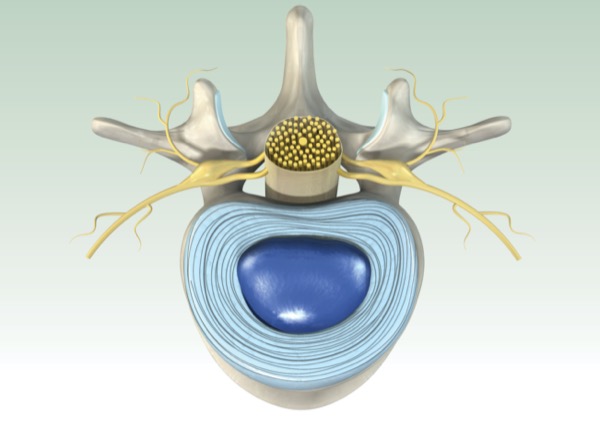


Degeneration of intervertebral discs (IVDs) is painful as cells of the inner disc transform to a subtype that is susceptible to or promotes infiltration of neurons from surrounding tissue, according to new in vitro and animal model investigations.

“We’ve identified for the first time particular cells that could be the key to understanding disc pain,” Dmitriy Sheyn, PhD, an assistant professor at the Board of Governors Regenerative Medicine Institute at Cedars-Sinai Medical Center, in Los Angeles, announced in a statement released by the medical center. “Learning more about how these cells work could lead to the eventual discovery of new treatment options.”

Sheyn and colleagues used single-cell RNA sequencing to identify the subtype of the human nucleus pulposus cell (NPC) in the jelly-like inner core of the disc and determined that their numbers increase when stimulated with conditions of disc degeneration, including decreased pH, hypoxia and lowered glucose, pro-inflammatory factors, and mechanical overloading (Sci Transl Med 2023;15[725]:eadg7020).

IVDs are associated with an estimated 40% of all cases of low back pain (Spine 2010;35[5]:531-536).

While acknowledging that pain is a sensory and emotional experience that cannot be fully reproduced in vitro, Sheyn and colleagues asserted that it is possible to study the interactions between NPCs and sensory neurons in tailored and in vitro models.

Although healthy NPC tissue is avascular and aneural, the investigators employed a two-channel microfluidic organ-chip device to determine whether these stimulated NPCs (sNPCs) can become susceptible to and/or promote neuronal ingrowth. Placement of sNPCs or NPCs in one channel and primary dorsal root ganglion–derived sensory cells in the other demonstrated axonal growth through the porous separation membrane to the sNPCs but not to NPCs.

“We don’t know whether the pain-associated cells attracted the invasion of the neurons or the healthy cells repelled it, but there was definitely a difference between the healthy and the pain-associated cells,” Sheyn said.

In a rat model of discogenic pain, the sNPCs injected into healthy IVDs induced pain-related behavioral outcomes (J Orthop Res 2018;36:1305-1312). The behavioral tests included measures of cold and mechanical sensitivity that have been used as indexes of the low back pain phenotype. Separate investigations, described in the Cedars-Sinai release, support these in vitro and animal model results in finding greater numbers of sNPCs in IVD samples from patients with disc-associated low back pain than in those who were pain-free despite disc degeneration.

Sheyn and colleagues posit that the neuronal ingrowth is recruited through secretion of nerve growth factor (NGF) and brain-derived neurotrophic factor, which they detected with both an isolated and stimulation-formed NPC subtype, but not healthy NPCs. They also detected fibroblast growth factor-2, a growth factor involved in the formation of granulation tissues.

“Multiple degenerative stimuli are likely necessary for the onset of NPC-mediated discogenic back pain,” the investigators suggested. “The in vitro application of any single stressor was not able to stimulate NPCs to express NGF. Either the pro-inflammatory cytokine IL-1beta [interleukin-1beta] alone or an acidic environment alone could induce the expression of inflammatory cytokines in NPCs, but neither induced NGF expression.”

Conversely, the in vitro application of combinatory stimuli—IL-1beta, low pH and low glucose—yielded NPCs with a high expression of NGF, and these sNPCs induced a back pain phenotype without visible matrix degeneration in rats, according to the researchers.

“Together, the degenerative stimuli in degenerating IVDs may induce the transformation of normal NPCs into pain-triggering NPC (subtype),” they noted.

Implications for Mitigating Discogenic Pain

“We think that this mechanism only applies to discogenic pain, and most probably muscle-related pain is a different mechanism altogether,” Sheyn told Pain Medicine News. “The discogenic pain comprises approximately 40% of the (cases of) lower back pain; the other causes share smaller parts of the pie. However, the discogenic pain is also multifactorial, and we are trying to dissect these factors as much as possible with this and the next studies.”

“Unveiling the key cells behind disc-related pain marks a pivotal stride in reshaping how we approach back pain management,” Mark Vrahas, MD, the chair of orthopedics at Cedars-Sinai, added on the implications of the study findings for future therapeutic interventions, in the statement released from Cedars-Sinai Medical Center. “This discovery opens doors to targeted therapies that may revolutionize orthopedic treatments, offering hope to millions worldwide.”

Sheyn awaits clinical interventions that may arise from this area of research. “Deeper understanding of the mechanism of pain development in the context of disc degeneration is the first step towards regeneration,” he commented.

Sheyn said he anticipates two intervention strategies in particular that could emerge from their finding an NPC subpopulation that, under certain conditions, induces pain in degenerative IVDs.

“One possible way would be to target these specific cells or dilute them with fresh and healthy cells that would reduce their effect in the degenerated disc,” Sheyn noted. “The second more complicated approach would be to eliminate the ability of nerves to invade the disc, by elucidating further the signaling pathways and preventing of the nerve endings to develop.”

—Kenneth Bender


Sheyn reported no relevant financial disclosures.

Related Keywords