

×
ADVERTISEMENT

NOVEMBER 7, 2025

No NG Tube? A Questionable Judgment Call That Led to Permanent Patient Disabilities


Originally published by our sister publication Anesthesiology News

img-button

NEW YORK—In this edition of our series on anesthesia-related litigation, a judgment call led to long-term disabilities for the patient, and a hefty payout including $91,000 in expenses.

“We always include expenses in our presentations because it’s important—if you’re an employee of a facility with a self-insured program. That money comes out of the hospital’s treasuries, and an anesthesiologist

Originally published by our sister publication Anesthesiology News

img-button

NEW YORK—In this edition of our series on anesthesia-related litigation, a judgment call led to long-term disabilities for the patient, and a hefty payout including $91,000 in expenses.

“We always include expenses in our presentations because it’s important—if you’re an employee of a facility with a self-insured program. That money comes out of the hospital’s treasuries, and an anesthesiologist with a very high-cost quotient will be looked at with great concern by that facility,” said Michael Schoppmann, JD, the CEO of MLMIC Insurance Co.

“We want to incentivize you to take the steps we discuss in this presentation to avoid being sued or protect yourself if there is a lawsuit because being sued multiple times will cost your hospital millions of dollars to defend you, and that will not be received well.”

This case was one of three discussed at a session on insights into the legal process and malpractice claims at the 2024 annual PostGraduate Assembly in Anesthesiology.

image

Case and Outcomes

The patient was a 65-year-old woman with a four-day history of abdominal pain, nausea, vomiting and no bowel movement. Her medical history included breast cancer, obesity and hypertension, and her surgical history included mitral valve repair and hysterectomy complicated by ventral hernia; she was admitted by a general surgeon for incarcerated ventral hernia with perforation.

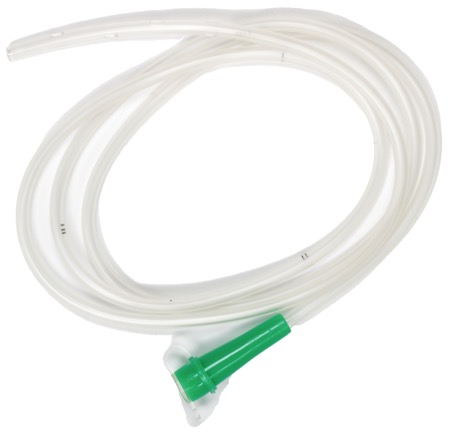
Her international normalized ratio (INR) was very high, 8.9, so she received Kcentra (prothrombin complex concentrate [human], CSL Behring) and vitamin K. The surgeon did not order a nasogastric (NG) tube because of the patient’s high INR and concern for perforation, and the patient was brought to the OR. On assessment, the anesthesiologist noted the patient had a full stomach. The anesthesiologist performed rapid sequence intubation with the Sellick maneuver (cricoid pressure) to reduce the risk for aspiration. The patient began to vomit during induction.

The anesthesiologist put the patient’s head down, suctioned and then intubated. The surgery proceeded, but during the procedure the patient’s oxygen saturation dropped. The surgeon was notified. Intraoperative bronchoscopy showed gastric contents in the trachea. The patient continued to decompensate and was moved to the ICU.

Later that day, the patient was transferred to a higher level of care for a small-bowel resection, anastomosis and closure. Diagnosis included aspiration pneumonia, respiratory distress, septic shock and renal failure. The patient also had a large retroperitoneal hematoma requiring lumbar artery embolization, which led to three abdominal surgeries, prolonged coma and altered mental status.

image

After a prolonged rehabilitation, the patient was able to walk with the aid of a walker, but she suffered neuropathy and cognitive defects ascribed to complications from the aspiration pneumonia and prolonged ICU stay.

The allegations were improper management of an anesthesia patient and failure to monitor her physical status.

Liability Issues

Experts who reviewed the case questioned whether the OR was a safer environment than the emergency department and thought an NG tube should have been placed. They believed the anesthesiologist decided against using an NG tube on the belief that this does not always eliminate the risk for aspiration.

“The first expert said it was a judgment call, which is hard to defend in a trial. No jury likes to hear that it’s a 50-50 call. They want a more definitive answer. The three other experts we queried said the NG tube should have been placed,” Schoppmann said.

A poll of attendees at the session showed about half were in favor of NG tube placement: “So yes, a judgment call,” said Patricia Fogarty Mack, MD, a professor of clinical anesthesiology at Weill Cornell Medical College, in New York City.

“But if something is a judgment call, we have to defend that through expert witnesses who will say a judgment call was defensible,” Schoppmann said.

Other potential problems the experts cited were misselection and mismanagement of medications and therapies, subpar patient monitoring, and possible problems with technical performance.

What Was Done Right, What Could Have Been Better?

A number of steps, such as the rapid sequence intubation, were performed correctly. “Other right steps? When the patient began to decompensate, the surgeon was advised and the surgery was stopped. Information we don’t have that I would like to know is why a bronchoscopy wasn’t done immediately to assess the situation,” Mack said. (A bronchoscopy had been performed, but how much sooner could it have been done?)

What could have been done better? Full gastric content is a known risk for aspiration, but despite the patient’s full stomach, although considered, they did not place an NG tube.

Based on the experts’ identification of deviations from standard of care, the case was settled out of court, with an indemnity payment of $2.1 million and expenses of more than $91,000. “The anesthesiologist was investigated by the state, but not disciplined because the decision not to place the NG tube was a judgment call,” Schoppmann said.

Lessons Learned

Reflecting on the case, Mack thought about how she would have advised a colleague in a similar situation. “If you came to me and said, ‘My patient [had] this terrible outcome; this was my decision-making,’ I would say to make sure you don’t change the chart, but add an addendum saying, ‘I chose to do a rapid sequence intubation and not place an NG tube because the INR was very high, and I was concerned about the risk of a massive nose bleed.’”

Documenting a case in real time may be impractical or impossible; your first priority is to care for the patient. “We all make documentation mistakes. That’s OK. If you need to make a correction, do so in accordance with advice from your local risk management team, as soon as possible, in the appropriate section of the patient’s chart,” Mack said.

“I love that advice,” Schoppmann said. “Sometimes years go by between the date of treatment and the filing of a lawsuit. Most of us can’t remember what we had for dinner last night, let alone a patient we saw on some Tuesday afternoon four years ago. If you can’t document in the moment, follow the outline Dr. Mack suggested. Jurors will accept that you were taking care of a patient. They will love you for it. We have never lost that argument.”

—By Monica J. Smith


Mack and Schoppmann reported no relevant financial disclosures.

Editor’s note: Neither the anesthesiologist quoted in this article nor NewYork-Presbyterian Hospital/Weill Cornell Medical Center were involved with the case presented here.

Related Keywords