

×
ADVERTISEMENT

JUNE 11, 2025

Tips on Building a Successful Same-Day Total Joint Program

Perspectives From Academia, Private Practice and a Surgeon


Originally published by our sister publication Anesthesiology News

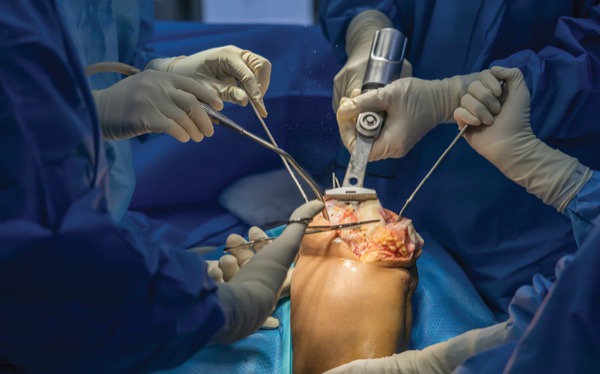
PHILADELPHIA—Same-day outpatient total knee arthroplasties (TKAs) and total hip arthroplasties (THAs) are projected to increase from approximately 15% of all cases in 2016 to 50% by 2026, according to a 2017 study (Curr Rev Musculoskelet Med 2017;10:567-574).

“By 2026, there may be more outpatient than inpatient total joint arthroplasties [TJAs],” said Eric Schwenk, MD, the director of orthopedic anesthesia at

Originally published by our sister publication Anesthesiology News

PHILADELPHIA—Same-day outpatient total knee arthroplasties (TKAs) and total hip arthroplasties (THAs) are projected to increase from approximately 15% of all cases in 2016 to 50% by 2026, according to a 2017 study (Curr Rev Musculoskelet Med 2017;10:567-574).

“By 2026, there may be more outpatient than inpatient total joint arthroplasties [TJAs],” said Eric Schwenk, MD, the director of orthopedic anesthesia at the Sidney Kimmel Medical College of Thomas Jefferson University, in Philadelphia, during a session at the 2024 annual meeting of the American Society of Anesthesiologists.

“At our institution, our length of stay for these procedures in 2010 was three to four days, while last year, our mean length of stay was 1.2 days,” said Schwenk’s colleague P. Maxwell Courtney, MD, an associate professor of orthopedic surgery and the chief of the Division of Adult Reconstruction. “Of the 16,000 joint replacements we do every year, about 40% are outpatient.”

Patient demand, cost and payment structures, and Centers for Medicare & Medicaid Services policy changes are considered the primary drivers of these changes.

image

“Patients are asking for this now. They’d rather go home on the same day and recover on their couch as opposed to in the hospital,” Courtney said. “For surgeons, we can take cases out of the academic hospital and do them in a surgery center where we’re going to have a financial ownership. And from a payor standpoint, outpatient TJA reduces episode-of-care costs.”

Hip and knee replacement has long been Medicare’s largest inpatient expenditure. After the passage of the Affordable Care Act, Medicare moved toward bundled payment models, including the 2016 Comprehensive Care for Joint Replacement model bundle for THA and TKA, which was mandatory in 67 randomly chosen census areas.

“These early bundle results were successful, with multiple papers showing great success with reduced spending, reduced length of stay and reduced readmissions,” Courtney said (N Engl J Med 2019;380[3]:252-262).

In January 2018, Medicare removed TKA from its “inpatient-only” list, followed by THA in January 2020, allowing these procedures to be reimbursed when performed at outpatient facilities.

Patient Selection and Required Infrastructure

Outpatient TJA has proven to be safe for most patients, Courtney said, citing studies that he led finding no difference in readmissions or reoperations and complication rates that were two to four times higher among inpatients than outpatients (J Arthroplasty 2017;32[5]:1426-1430; 2018;33[7S]:S28-S31).

Courtney said outpatient TJA should be avoided in patients with chronic obstructive pulmonary disease requiring oxygen, chronic kidney disease, cardiovascular disease, atrial fibrillation, diabetes, malnutrition and those with a body mass index greater than 35 kg/m2 or 75 years of age and older.

“Chronic opioid use is also a no-no. You’re not going to be able to get them comfortable out of the PACU,” he said. “Patients with urinary retention are also an issue, and we have a couple of readmits every year for people who need to come back to get a Foley catheter. Patients also really need social support at home.”

Outpatient TJA also has specific infrastructure requirements, including careful coordination with the hospital/surgery center, frequent follow-up care and access to staff at all times.

“Anesthesiologists at all of our surgery centers review cases two to three weeks before to ensure that each patient is an appropriate candidate,” Courtney said. “We have a nurse navigator program, and they call every patient before and after surgery. We also have 24-hour nurse phone access, where patients can call if they have issues.”

Perioperative Protocols For Outpatient TJA

Studies have found that nausea, hypotension, pain, failed physical therapy and urinary retention are the most common complications preventing hospitalized TJA patients from being discharged, according to Ashley Shilling, MD, a professor of anesthesiology and orthopedic surgery and the medical director of outpatient anesthesia at UVA Health, in Charlottesville, Va.

image

She said there are many ways to avoid complications, including strong preoperative screening and patient education. Patients and family members also must have appropriate expectations.

Shilling cited a systematic review of 37 studies showing that preoperative education decreases anxiety, pain and length of stay (World J Surg 2023;47[4]:937-947).

Ultimately, multimodal analgesia techniques enhance pain management in outpatient TJA.

“Opioids are still a mainstay of pain relief protocols for TJA, and it is hard to do a total joint arthroplasty without using any opioids at all. The important point is that they should not be used alone, but as part of a comprehensive pain plan,” Shilling said.

Acetaminophen and nonsteroidal anti-inflammatory drugs (NSAIDs) are the foundational components of such a plan, providing effective pain relief and reducing the need for opioids, with NSAIDs also offering anti-inflammatory benefits.

“There is moderate evidence for acetaminophen’s efficacy in pain management and strong evidence for its safety. It’s cheap and it’s safe,” Shilling said. “Of all the different multimodal analgesics, NSAIDs have the greatest effect on opioid consumption and pain level. They are incredibly beneficial for these patients.”

Gabapentinoids can be used as adjuncts to reduce opioid consumption, but caution is needed due to potential side effects like sedation and respiratory depression, particularly in older patients.

There is some evidence for the use of ketamine in decreasing the need for opioids, as well as reducing postoperative nausea and vomiting, while most recently, dexamethasone has also shown efficacy in decreasing pain in this setting.

Peripheral nerve blocks (PNBs) are recommended for THA and TKA patients except when contraindications preclude their use, according to recommendations from the International Consensus on Anesthesia-Related Outcomes after Surgery, based on a systematic review and meta-analysis of the current literature (Reg Anesth Pain Med 2021;46[11]:971-985).

“They found that patients who receive PNBs have lower risk of certain complications, such as cognitive dysfunction, respiratory events, cardiac events, site infection, thromboembolism and need for blood transfusion,” Shilling said.

Both spinal and general anesthesia are viable options for intraoperative anesthesia, pointing to a recent study finding that both led to a reliable same-day discharge in TJA, with similar complication rates. General anesthesia facilitated faster discharge compared with bupivacaine spinal anesthesia but was associated with higher rates of pain and nausea (J Arthroplasty 2024;39[6]:1463-1467).

Sanjay Sinha, MD, an associate clinical professor of anesthesiology at the University of Connecticut School of Medicine, in Farmington, and the chief of regional anesthesia at Saint Francis Hospital and Medical Center, in Hartford, Conn., reviewed management conditions that may either delay discharge or lead to the transfer of patients to the hospital, such as pain, hypotension or orthostasis, postoperative nausea and vomiting, and urinary retention.

Assessment of postoperative pain should involve subjective patient-reported pain scores and objective signs of distress, such as vital signs and facial expressions.

“We also evaluate any nerve blocks that have been done, the efficacy of those nerve blocks, the kind of pain medications they’ve received so far, and whether they are requesting more pain medications currently. That gives us a more comprehensive understanding of the pain the patient is experiencing,” he said.

Evidence supports the use of adductor canal block in patients receiving local infiltration analgesia, to improve pain control, especially on the day of surgery, compared with a sham adductor canal block (Minerva Anestesiol 2022;88[4]:238-247).

“Some patients are nonresponders to the adductor canal block, either because of the local anesthetic technique, the volume of anesthetic used for the block or just variation in anatomy,” Sinha said. “In these cases, there is evidence that femoral nerve block provides incremental analgesic benefit and adds value in terms of pain control, although it does cause quadriceps weakness.”

Orthostatic hypotension or orthostatic intolerance is commonly seen in the PACU in TJA patients, particularly in THA patients.

“The reasons are multifactorial, including dehydration, anemia, surgical stress and pain, and the effects of anesthesia. Obviously, the best option is to keep these patients hydrated preoperatively, so we instruct them to be NPO after midnight in terms of solids but continue to hydrate until they come to the surgery center.”

When orthostatic hypotension does occur, treatment options include fluid administration and the use of pressors, as well as point-of-care ultrasound.

Postoperative nausea and vomiting occur in about 20% to 30% of TJA patients, negatively affecting recovery and potentially delaying discharge and rehabilitation.

“It is obviously multifactorial; there are at least five major receptor systems that are involved in the etiology, and most of the antiemetics are antagonists of these receptor systems,” Sinha said. “It’s important that we identify high-risk patients and engage early prophylaxis prior to surgery. If nausea and vomiting do occur in recovery, we should again treat early and aggressively and not repeat the same medications we used in prophylaxis.”

Urinary retention is another common complication of TJA, establishing relationships with local urologists who can manage urinary catheters that may have been placed before discharge from the surgicenter. For patients requiring hospital transfer, he suggested bypassing the ER.


The sources reported no relevant financial disclosures. Schwenk is a member of the Anesthesiology News editorial board.

—By Gina Shaw

Related Keywords