

×
ADVERTISEMENT

JANUARY 21, 2026

Powering Down Ultrasound Machines Cuts Energy Use Without Disrupting Workflow


Originally published by our sister publication Anesthesiology News

Vivian H.Y. Ip, MD
Vivian H.Y. Ip, MD

ORLANDO, Fla.—Actively powering down ultrasound machines between regional anesthesia scans results in significant environmental and cost savings, according to a new study. A Canadian research team concluded that the intervention resulted in 81% less energy use compared with pre-intervention levels, with no interruption in workflow.

“Regional anesthesiologists perform many blocks with ultrasound


Originally published by our sister publication Anesthesiology News

Vivian H.Y. Ip, MD
Vivian H.Y. Ip, MD

ORLANDO, Fla.—Actively powering down ultrasound machines between regional anesthesia scans results in significant environmental and cost savings, according to a new study. A Canadian research team concluded that the intervention resulted in 81% less energy use compared with pre-intervention levels, with no interruption in workflow.

“Regional anesthesiologists perform many blocks with ultrasound machines, after which we simply put the lid down and move on,” began Vivian H.Y. Ip, MD, a clinical professor of anesthesia at the University of Calgary, in Alberta. “It made me wonder what the actual environmental effects of those actions were.”
“From a student perspective, I started reading and realized that ultrasound machines weren’t studied as much as machines like CT scanners and MRIs,” added co-investigator Edward Serghi, BS, a medical student at the same institution. “It seems like such a simple concept, but one that’s very easy to implement and can have great environmental impact and cost savings.”

To quantify energy consumption, the investigators connected a portable logging device to a single ultrasound machine in the regional anesthesia block room and then compared one week of energy consumption under both typical use and energy-saving use. With typical use, the device was left to passively enter hibernation mode. During the following week, they actively turned off the machine, including powering it down overnight.

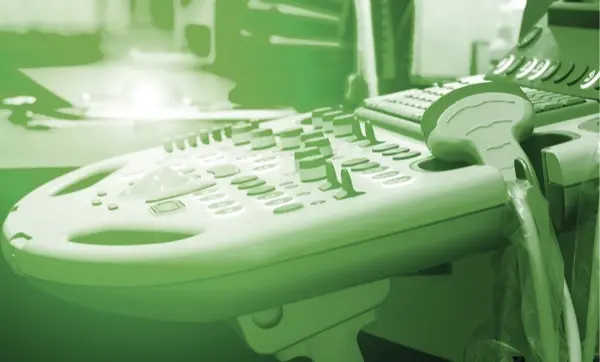
Ultrasound Machines Adobe Stock
© Adobe Stock

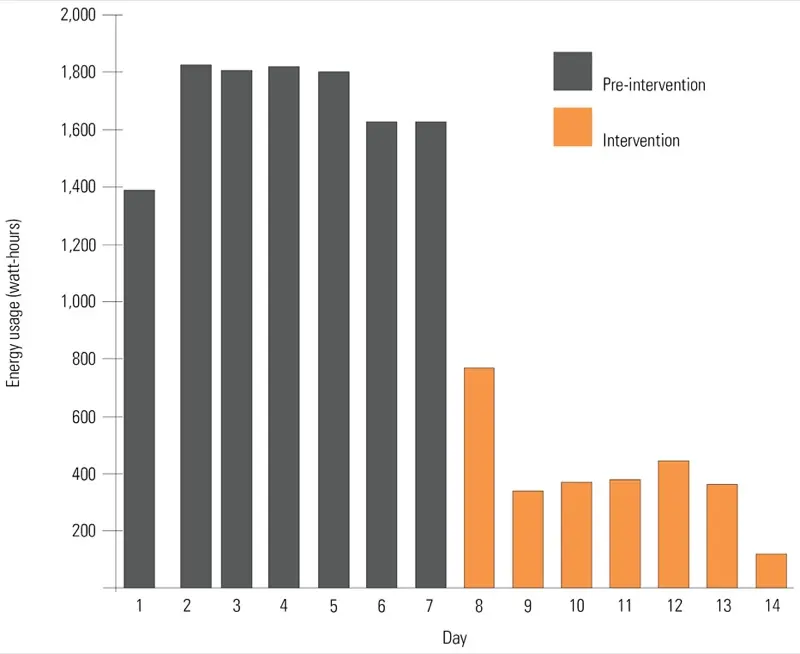
Presenting at the 2025 annual spring meeting of the American Society of Regional Anesthesia and Pain Medicine (abstract 6436), the researchers reported that even though active scanning time for a single ultrasound machine increased from 347 to 511 minutes between the two study periods, energy consumption fell from 12,306.09 to 2,346.32 watt-hours (Figure). This equates to a daily savings of 1.4 kWh and an annual savings of some 57 kg of carbon dioxide emissions per ultrasound machine.

Decline in energy consumption with intervention
Figure. Decline in energy consumption with intervention.

“On top of that, we found cost savings as well,” Serghi said. “It’s approximately $100 [Canadian] annually per machine, which doesn’t seem like much,” Ip added. “But when you think about the larger scale, it can have a significant impact on the bottom line. It’s the same with the environmental savings. Cumulatively, these efforts can make a huge difference.”

Turning these theoretical savings into real-life benefits can be tricky, the researchers acknowledged, but one that begins with education.

“I think the results speak for themselves, and if people see these numbers from our study, an anesthesiologist is maybe more likely to adopt this small change into their practice,” Serghi said. “And then from small efforts, it can proliferate, particularly because anesthesiologists interact with so many other parts of the healthcare system.”

By Michael Vlessides


Ip and Serghi reported no relevant financial disclosures.