

×
ADVERTISEMENT

SEPTEMBER 11, 2023

Opioid Red Flags: Miss Them, and DEA May Come Calling


Originally published by our sister publication Specialty Pharmacy Continuum

By David Bronstein

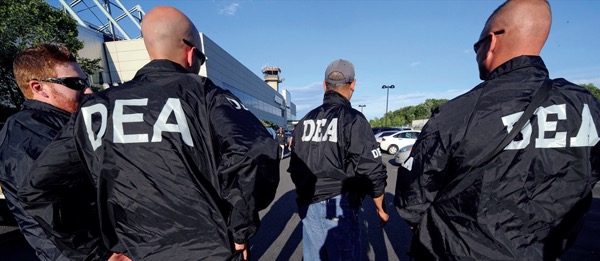
PHOENIX—Given enough cause, the Drug Enforcement Administration (DEA) will inspect pharmacies that fail to recognize and address suspicious prescriptions for opioids and other controlled substances (CS). Dispensers that ignore these “red flag” scripts subject their licenses, their pharmacies and themselves to DEA and state enforcement action, a CS compliance expert noted during


Originally published by our sister publication Specialty Pharmacy Continuum

By David Bronstein

PHOENIX—Given enough cause, the Drug Enforcement Administration (DEA) will inspect pharmacies that fail to recognize and address suspicious prescriptions for opioids and other controlled substances (CS). Dispensers that ignore these “red flag” scripts subject their licenses, their pharmacies and themselves to DEA and state enforcement action, a CS compliance expert noted during APhA2023.

Fortunately, pharmacies can employ strategies to identify problematic prescriptions, avoid DEA inspections “and most importantly, protect the health of patients,” said Larry K. Houck, JD, a director at Hyman, Phelps & McNamara, PC.

One of the first steps is to know what constitutes a red-flag prescription. Although “red flag” does not appear in the Controlled Substances Act or DEA regulations, the agency often uses the term in cases brought against pharmacies for CS violations. A landmark action against Gulf Med Pharmacy is a case in point. DEA initiated its investigation of Gulf Med because it was one of the top 10 oxycodone, hydromorphone and hydrocodone purchasers in Florida. The DEA found that Gulf Med failed to exercise its “corresponding responsibility” by repeatedly filling CS prescriptions that exhibited “obvious red flags of abuse or diversion without documenting its resolution of those red flags,” the agency stated in its decision.

So, what exactly is a pharmacist’s “corresponding responsibility” when dispensing CS prescriptions? There are several determining factors, but at its core, the concept requires pharmacists to refuse to fill a prescription “where the pharmacist or pharmacy knows or has reason to know that the prescription is invalid,” Mr. Houck said.

As for what renders a CS prescription invalid, Mr. Houck acknowledged that such a determination is not a binary one; there are mitigating circumstances that could explain why, for example, a relatively small community pharmacy may legitimately be dispensing large amounts of opioids. “If the pharmacy is across the street from a cancer center, where a lot of patients are discharged with opioid prescriptions for pain, that could account for the high volume. That’s a determination the DEA or other regulatory bodies can make fairly quickly, and in fact often do so,” he said.

In the case of Gulf Med Pharmacy, however, “that certainly was not what was happening,” Mr. Houck said. Indeed, the DEA and its expert witness focused on several red flags that the pharmacy failed to identify and resolve:

Cocktail medications. These are CS combinations that increase a patient’s risk of death or overdose. In Gulf Med’s case, the pharmacy repeatedly dispensed high doses of opioids (hydromorphone, oxycodone and extended-release morphine sulfate) with high doses of depressants such as benzodiazepines (e.g., alprazolam, clonazepam, or diazepam) or muscle relaxants (e.g., carisoprodol). This combination, often referred to as the “trinity” cocktail, “is incredibly dangerous when consumed together, because both drugs depress the central nervous system and can lead to respiratory failure,” Mr. Houck said. “DEA’s position is that there really is no rational medical indication for it; Gulf Med clearly should have questioned these combination prescriptions.”

image

Mr. Houck cited these additional opioid prescribing red flags that the DEA often cites pharmacies for missing:

  • long-term prescriptions for concurrent doses of the same CS category, such as oxycodone and hydromorphone;
  • concurrent doses of the same CS, such as 15- and 30-mg oxycodone; and
  • excessive daily dosages of opioids. (CDC guidelines for chronic pain warn of risks when increasing dosage to 90 morphine milligram equivalents per day or more).

Improper dosing for pain management. Short-acting painkillers should only be prescribed in smaller, as-needed doses for breakthrough pain. Despite that, Gulf Med failed to question excessive daily doses of the short-acting painkillers—a regimen that the DEA expert in the case pointed out “makes no pharmacologic sense,” Mr. Houck said.

Cash payments. When patients use cash to pay for CS prescriptions rather than insurance or worker’s compensation, that should immediately raise suspicion that the patients are seeking an end-run around the type of scrutiny that some payors apply to these substances.

Price gouging. The DEA alleged that Gulf Med charged certain patients two to three times the market rate for their CS medications. Inflated pricing is a classic red flag for drug abuse or diversion, Mr. Houck noted. “Legitimate patients, who can fill their prescriptions anywhere, will switch pharmacies to pay the fair market price, while suspect patients will fill prescriptions at rogue pharmacies and pay whatever price that pharmacy charges,” he said.

Dispensing CS prescriptions at inflated prices “also demonstrates that a pharmacy knows it is filling prescriptions that may not be legitimate,” he added.

In fact, it’s fairly easy to show that a pharmacy’s CS pricing policies are higher than the market rate. In the Gulf Med case, DEA’s expert established a “baseline of normalcy”—that is, legitimate pricing—by contacting representative pharmacies in the local area. So this is not something that will escape the attention of DEA investigators.

Don’t Surrender Your DEA Registration Among Legal Lessons From the Field

image

If your pharmacy is being inspected, Larry K. Houck, JD, a director at Hyman, Phelps & McNamara, PC, had one very important piece of advice. “Be prepared for investigators coming into your pharmacy, saying they have found violations and asking you to voluntarily surrender your DEA pharmacy registration on the spot,” Mr. Houck said. “Don’t do it without legal counsel! Once you surrender that registration, it’s gone, and getting it back can be arduous.”

Legal representation gives a pharmacy the opportunity to review and respond to any alleged violations. “That way, you still have some options for recourse based on extenuating circumstances,” he said. “Remember, there is no law that says you have to give up that license without due process.”

Maureen Burger, MSN, RN, the chief nursing executive and a senior consultant at Visante, agreed that it’s a good idea not to voluntarily give up your DEA pharmacy registration. However, when it comes to engaging legal counsel, she offered an important caveat. “Outside legal counsel doesn’t always have a good handle on prevention and detection of diversion,” she said. “Primarily, they are there to protect the organization. So they sometimes create corrective and preventive action plans that include a lot of measures that even the DEA may not have required.”

Ms. Burger cited, as an example, an organization that had a major diversion event and agreed, upon the advice of its lawyers, to count narcotics at the end of every shift. “There’s no DEA requirement in any mitigation policies that we know of to do that,” Ms. Burger said. “In fact, it actually may create more [CS] discrepancies because you have staffers counting pills all the time, and that just creates more opportunity for diversion.”

What’s more, she noted, the facility now is committed to a three-year plan that includes this onerous narcotics counting requirement. “They’re stuck with it,” she said. “They can’t even go back and change their policy because that’s what they agreed to.”

A better alternative is to ensure any law firm you hire has extensive experience with cases of diversion, and/or bringing in consultants such as Visante that work extensively in this field. As for when to bring in outside help, “we always encourage people to try and figure out as much as they can by themselves, through a gap analysis, and then have us come in,” said Greg Burger, MS, RPh, a managing director at Visante. “At the end of the day, it’s all about helping the organization see what they don’t see because they’re enmeshed in their own processes and procedures every day, and it becomes the norm—right or wrong.”

—D.B.

The Pharmacist’s Role

Mr. Houck offered several guideposts that pharmacies can use when deciding when and how to intervene in the face of a suspicious CS prescription. But he first noted what won’t satisfy that responsibility: simply verifying that the prescriber has a valid DEA registration and state license. Most if not all of the CS prescriptions in the Gulf Med case were valid based on that narrow scope of responsibility, he noted.

Instead, pharmacists need to use “their professional judgment, training and experience” to recognize and resolve red-flag CS prescriptions. In the process, “they must rely on their knowledge of, and history with, the prescriber and patient, and the circumstances surrounding every CS prescription.”

They also should do the following:

  • have a policy that prohibits providing financial or other incentives for filling CS prescriptions;
  • use all available resources, including the state prescription drug monitoring program, in evaluating whether to fill a prescription; and
  • contact the prescriber, including obtaining diagnosis codes to confirm drug, quantity and strength are appropriate.

Is DEA Dictating Patient Care?

Many of these DEA actions are to some degree influenced by the need for pharmacists and pharmacies to steer clear of trouble with the agency. One APhA2023 audience member took issue with that dynamic. “Why are we allowing a policing body to essentially dictate patient care?” the attendee asked.

Mr. Houck replied by reiterating that the most important reason for pharmacists to recognize red flag CS prescriptions is not to avoid DEA inspections. “It’s actually to protect the patient, who may be struggling with substance use disorder,” he said. “So the patient does always come first.”

Mr. Houck acknowledged, however, that the DEA inspection process is not without flaws. For example, there is a lack of transparency when it comes to the exact thresholds the agency uses to decide when a pharmacy is an outlier with CS prescriptions, he noted.

And there is no lack of critics when it comes to how some DEA investigators operate. Pharmacists United for Truth & Transparency recently alleged that there has been “a dramatic increase in seemingly predatory East Coast area DEA inspections” that “appear laser-focused on administrative processes, levying hefty penalties for reasonably minor clerical missteps” (bit.ly/3HnYIu6). However, the group offered no verifiable data or sources to corroborate that claim.

It’s important not to get distracted by such claims or concerns, Mr. Houck stressed. Although there may be some cases of excess on the part of the DEA, the goal of any organization handling CS prescriptions should be one of vigilance, he noted. “You need to review your policies and procedures for recognizing suspicious prescriptions and then intervening when appropriate.”


The sources reported no relevant financial disclosures beyond their employment.

Related Keywords