


×
ADVERTISEMENT

DECEMBER 23, 2024

Ultrasound-Guided Percutaneous Cryoneurolysis Effective for Traumatic Rib Fracture Pain

image
Adam Schaar, MD

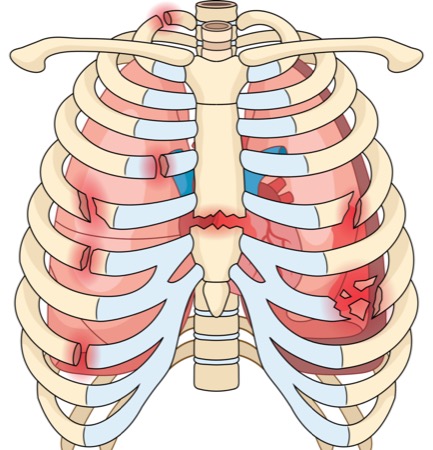
SAN DIEGO—Interim analysis of an ongoing study shows that ultrasound-guided percutaneous cryoneurolysis of intercostal nerves is a viable analgesic modality after traumatic rib fracture. Researchers found that patients undergoing the novel treatment gained analgesic benefits for as long as two months after the procedure.

“Traumatic rib fractures occur in approximately 10% of trauma patients and are associated with pain, morbidity and mortality,” said Adam

image
Adam Schaar, MD

SAN DIEGO—Interim analysis of an ongoing study shows that ultrasound-guided percutaneous cryoneurolysis of intercostal nerves is a viable analgesic modality after traumatic rib fracture. Researchers found that patients undergoing the novel treatment gained analgesic benefits for as long as two months after the procedure.

“Traumatic rib fractures occur in approximately 10% of trauma patients and are associated with pain, morbidity and mortality,” said Adam Schaar, MD, a resident at the University of California, San Diego. “Although peripheral nerve blocks have been shown to reduce pain in these patients and improve peak expiratory flow rate and oxygen saturation, the analgesia provided by these blocks is usually limited to less than 24 hours while the pain associated with traumatic rib fractures can often persist for many months.

“Percutaneous cryoneurolysis therapy exposes nerves to extreme cold, ideally between –20° C and –100° C such that Wallerian degeneration is introduced,” he continued. “This can provide analgesia on the order of weeks to months.” Although previous research in percutaneous cryoneurolysis showed improved pain control in traumatic rib fracture patients, a randomized controlled trial has not been conducted.

With that in mind, the investigators enrolled a cohort of adult patients into the study, all of whom had been admitted with one to six rib fractures. Participants were randomized to one of two treatments: active cryoneurolysis plus a sham local anesthetic block (cryoneurolysis device was triggered using two cycles of two-minute gas activation separated by one-minute defrost periods for the target intercostal nerves), or control with sham cryoneurolysis plus a single-shot intercostal nerve block with 3 mL of 0.5% ropivacaine.

The participants were contacted at various time points up to 12 months after the procedures. The trial’s primary outcome measure was maximum voluntary inspiratory volume between baseline and the next day.

In a presentation at the 2024 annual spring meeting of the American Society of Regional Anesthesia and Pain Medicine (abstract 5216), Schaar reported that the maximum inspiratory volume change was found to be 1,125 mL for the four patients in the cryoneurolysis group (IQR, 750-1,375 mL), and 0 mL for the four patients in the sham group (IQR, –162.5 to 125 mL). The difference between treatments was not significant (P=0.055).

“This is an interim analysis, and at the time of unblinding for this study we had a total of eight participants,” Schaar noted. “Unblinding occurred for purposes of grant submission. In the final trial, we’ve now enrolled 20 participants and the trial is still ongoing.”

In terms of secondary outcomes, patients in the cryoneurolysis group had greater improvements than control counterparts at virtually all time points from baseline to month 2 on average pain scores, worse pain scores and opioid consumption.

“So at this interim analysis time point, it appears that percutaneous cryoneurolysis is a viable analgesic modality for prolonged pain control following traumatic rib fractures,” Schaar said.

Although the study was limited by small sample size, the poster drew many comments from the meeting attendees.

“Did you notice any side effects, such as neuropathy, in the post-procedural period?” one attendee asked.

“We didn’t for this study, although it’s a pretty common question that’s asked with regard to cryoneurolysis,” Schaar replied. “There’s a fear of causing neuromas, but I think a lot of that comes from the fact that with cryoneurolysis, there are no set protocols with respect to temperature and the amount of exposure the nerves are going to get. In theory at least, it has been shown that the endoneurium, perineurium and epineurium will all remain intact as long as the temperature is greater than –100° C. That allows for reliable axon growth and reduces the risk of neuroma formation.”

“Can you talk about your workflow a little bit?” another attendee asked. “Who’s doing these procedures, where and when?”

“They are all performed by a regional anesthesiologist on our team,” Schaar replied. “In this study, co-investigator Dr. John Finneran performed all the blocks in our preoperative block area. We just treat them the same as we do a normal peripheral nerve block.”

—Michael Vlessides


Schaar reported that his institution received funding from Epimed International and Infutronix for other research.

Related Keywords