

×
ADVERTISEMENT

OCTOBER 11, 2024

Pilot Study Yields Promising Results for Percutaneous Auricular Neuromodulation in Cholecystectomy, Hernia Repair

SAN DIEGO—Percutaneous auricular neuromodulation improves analgesia and reduces pain interference with physical and emotional functioning in the first week after cholecystectomy and hernia repair, a new pilot study has concluded.

These findings, the researchers said, offer evidence that the novel technology may represent a feasible analgesic alternative for ambulatory cholecystectomy and hernia repair, although they recognized the need for larger, more definitive trials.

“Most people

SAN DIEGO—Percutaneous auricular neuromodulation improves analgesia and reduces pain interference with physical and emotional functioning in the first week after cholecystectomy and hernia repair, a new pilot study has concluded.

These findings, the researchers said, offer evidence that the novel technology may represent a feasible analgesic alternative for ambulatory cholecystectomy and hernia repair, although they recognized the need for larger, more definitive trials.

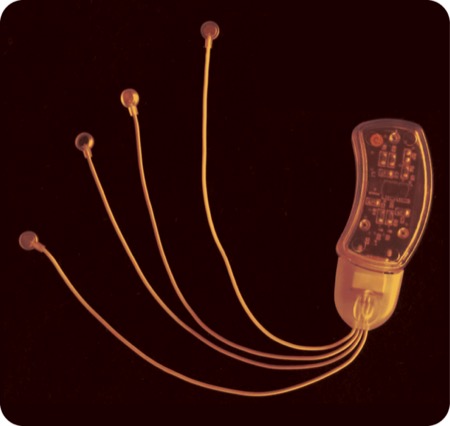
“Most people are familiar with acupuncture, which has been in use for thousands of years,” said Brian Ilfeld, MD, MS, a professor of anesthesiology in residence at the University of California, San Diego. “This device operates using the same theory, but instead of stimulating specific acupuncture points, it stimulates entire fields.” The technology involves the percutaneous implantation of multiple leads on and around the ear, followed by the delivery of electric current using an external pulse generator.

“The device has been FDA cleared to treat symptoms of opioid withdrawal for about a decade, but treated patients report that it seems to take away their pain as well,” Ilfeld said. Although its mechanism of action has yet to be fully elucidated, the researchers hypothesize that percutaneous auricular neuromodulation likely involves the modulation of serotonergic, noradrenergic and endorphinergic pathways, with an associated release of serotonin, norepinephrine and endogenous opioids.

“It’s been used not just for treating symptoms of opioid withdrawal but off-label for treating depression and anxiety as well,” he added. “This does suggest that there is some component that’s impacting emotions for postoperative analgesia.”

The current study, which was designated a priori as a pilot study to assist in planning a subsequent definitive trial, comprised 30 patients who had undergone cholecystectomy or hernia repair and were randomized to receive either active auricular neuromodulation (n=15) with the Bridge (Masimo) or sham therapy (n=15) beginning in the recovery room. Participants were discharged with the stimulator in situ and removed the disposable device at home after five days of treatment.

“The device is very easily placed,” Ilfeld said at the 2024 annual spring meeting of the American Society of Regional Anesthesia and Pain Medicine (abstract 5105). “Each of the three leads and one grounding wire is pushed into the skin like a thumbtack and held in place with a small bandage.”

As Ilfeld revealed, the median numerical rating scale pain level during the first five postoperative days was 0.6 (IQR, 0.3-2.4) for individuals who underwent active stimulation, significantly lower than 2.6 (IQR, 1.1-3.7) among those who underwent sham therapy (P=0.041). Median oxycodone use was 0 mg (IQR, 0-1 mg) for the active stimulation group and 0 mg (IQR, 0-3 mg) for the controls (P=0.524). Ten individuals (67%) in both treatment groups avoided opioids for the entire study period.

“Few patients weren’t taking any opioids for these smaller procedures,” Ilfeld said.

Secondary outcomes, which included daily least, average and worst pain between days 2 and 7, were lower in patients who received auricular neuromodulation. With respect to the highest pain level experienced over the eight-day study period, only one participant in the active treatment group experienced severe pain, compared with seven controls (P=0.031).

“We found it interesting that patients in the active treatment group had statistically significantly lower average and worst pain scores even on postoperative days 6 and 7, after the device had been removed,” Ilfeld explained. “Nevertheless, we were anticipating that possibility, because other neuromodulation models have found that there’s a carryover effect that lasts for two or three days afterwards.”

Patients who received active treatment were also found to experience less physical and emotional interference due to pain on postoperative days 4 and 6. Furthermore, pain did not interfere with physical or emotional functioning during the entire study period to any degree in seven neuromodulation patients and one control (P=0.031). No patient in either group had their sleep interrupted by pain over the course of the study.

These results, the researchers said, help demonstrate the potential for the technology to play an important analgesic role in the postoperative period.

“Our conclusion is that percutaneous auricular neuromodulation decreases pain and the interference of pain on daily activities after cholecystectomy and hernia repair,” Ilfeld said. “We think that there really is quite a difference using these little devices. In fact, the differences were far greater than we ever imagined.” Given these findings, he and his colleagues were confident that a larger, definitive trial seems warranted.

Timothy R. Deer, MD, the president and CEO of The Spine and Nerve Center of The Virginias, in Charleston, W.Va., and a clinical professor of anesthesiology and pain medicine at West Virginia University School of Medicine, in Morgantown, said he was not particularly surprised by the findings.

“The use of auricular stimulation has been shown to help opioid withdrawal, so I am not surprised that it has a mechanism that may help pain,” he told Pain Medicine News (PMN).

Deer, a PMN editorial advisory board member, also thought that the technology may eventually find purchase in clinical practice.

“The fact there is minimal training required makes it an accessible therapy for most physicians,” he noted. “If additional studies show success, it could become a standard of postoperative care if reimbursement is available.”

—Michael Vlessides


Deer reported no relevant financial disclosures. Ilfeld reported the University of California, San Diego has received funding and/or product support from the following companies for his other research studies: Avanos Medical, Epimed International, Infutronix, Masimo, SPR Therapeutics and Varian Medical Systems.