

×
ADVERTISEMENT

FEBRUARY 27, 2025

No Benefit From TAP Block in Abdominal Surgery, Study Shows


Originally published by our sister publication Anesthesiology News

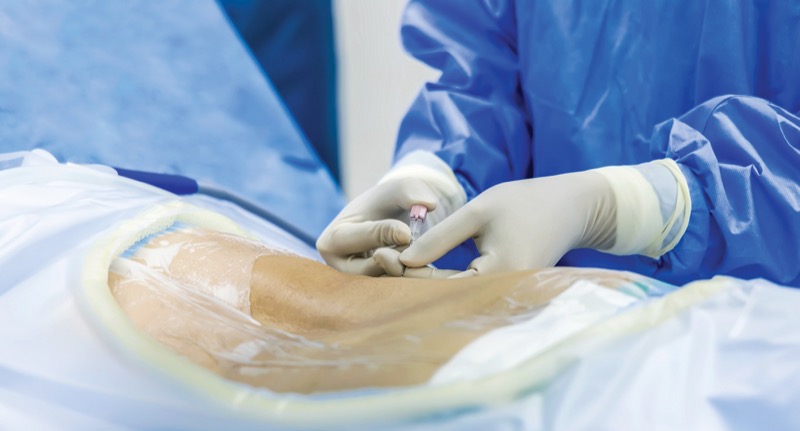
PHILADELPHIA—A randomized controlled trial has come to surprising conclusions about the efficacy of the transversus abdominis plane (TAP) block with either bupivacaine or liposomal bupivacaine in patients undergoing abdominal surgery. The CLEVELAND trial found that TAP blocks offered little analgesia following these procedures, and did not reduce opioid consumption in the first or 72 hours after surgery relative to

Originally published by our sister publication Anesthesiology News

PHILADELPHIA—A randomized controlled trial has come to surprising conclusions about the efficacy of the transversus abdominis plane (TAP) block with either bupivacaine or liposomal bupivacaine in patients undergoing abdominal surgery. The CLEVELAND trial found that TAP blocks offered little analgesia following these procedures, and did not reduce opioid consumption in the first or 72 hours after surgery relative to controls.

“TAP blocks are among the easiest blocks to perform, have few side effects and can be used in anticoagulated patients,” said Alparslan Turan, MD, a professor of anesthesiology, critical care and pain medicine, and the vice chair and director of outcomes research at UTHealth Houston. “Therefore, they have gained popularity in recent years.” Nevertheless, disadvantages have been noted with the blocks, including an inability to block visceral pain, and their relatively short duration of action. This last shortcoming may be successfully addressed by the use of liposomal bupivacaine, which led Turan and his colleagues to include it as a study arm in the current investigation.

“So, we had two questions,” Turan noted. “Does TAP block really work in abdominal surgery? And does liposomal bupivacaine offer any benefits over plain bupivacaine in these patients?”

To find answers, the researchers started the investigator-initiated trial, which comprised adult patients undergoing open or laparoscopic-assisted elective abdominal surgeries at Cleveland Clinic with an anticipated hospital length of stay of three days. Participants were randomized equally to treatment with either liposomal bupivacaine (40 mL of 0.25% plain bupivacaine plus 20 mL of liposomal bupivacaine and 20 mL of saline), plain bupivacaine (50 mL of 0.5% bupivacaine plus 30 mL of normal saline) or placebo (80 mL of normal saline).

image

In each case, TAP blocks (four-quadrant, bilateral subcostal and/or lateral) were performed either preoperatively or after induction by experienced attending physicians or fellows. General anesthesia was performed according to departmental protocol; postoperative pain control was maintained with hydromorphone and fentanyl. Since the participants were part of an enhanced recovery after surgery pathway, they also received oral acetaminophen plus gabapentin per departmental protocol.

At the 2024 annual meeting of the American Society of Anesthesiologists, Turan reported that the final study cohort comprised 261 patients in three demographically similar groups: 89 in the liposomal bupivacaine group, 84 in the plain bupivacaine group and 88 in the placebo group. With respect to the study’s primary outcome, total opioid consumption (in morphine milligram equivalents [MME]) during the first 24 hours after surgery was not found to differ significantly between patients who received liposomal bupivacaine (mean, 26 MME), plain bupivacaine (33 MME) and placebo (31 MME). Patients given liposomal bupivacaine showed a trend toward lower opioid consumption at 48 and 72 hours than their counterparts in the other two groups, but the differences did not reach statistical significance.

Secondary outcomes included time to return of sensation after the block, again with no observed differences between groups (mean, zero days in each). They also saw no difference in pain scores for the first 72 hours after surgery, with mean numerical rating scale scores of 4, 5 and 4 in the liposomal bupivacaine, plain bupivacaine and placebo groups, respectively.

Exploratory outcomes included opioid-related side effects and satisfaction with pain management, neither of which demonstrated any notable differences between groups. Finally, pain scores with movement (leg raise) were also found to be comparable in all three groups.

“To conclude, I would say that opioid consumption and pain scores at 24, 48 and 72 postoperative hours were comparable between liposomal bupivacaine, plain bupivacaine and normal saline placebo,” Turan said. “Therefore, TAP block does not seem to provide adequate analgesia to justify its use in abdominal surgery at this point, and I think clinicians should reconsider utilizing TAP blocks.

image

“I’m sorry to be the bearer of bad news, but that’s what the outcomes are,“ Turan noted.

During a robust discussion period following Turan’s presentation, one attendee asked, “So, is it safe to assume that bupivacaine doesn’t work at all in TAP blocks?”

“The data show no effect, and there are possible reasons for that,” Turan replied. “One of them is that TAP blocks have been shown to have a variable effect, meaning that some patients might benefit from it at some point. The second thing is that maybe controls just experienced a strong placebo effect.”

Karsten Bartels, MD, PhD, the Robert Lieberman Endowed Chair of Anesthesiology at the University of Nebraska Medical Center, in Omaha, noted that the observed time to return of sensation in all three groups was zero days. “Do you have a more granular measurement?” he asked. “I’d love to see if there was some sort of sensory block at some point.”

“Initially, we wanted to look at the sensorial coverage and observe the return over time,” Turan replied. “However, after doing that in 10 patients, we found that the measurements were very unpredictable. Plus, all the sensations returned before the first day ended. So I suspect there is no difference there.”

By Michael Vlessides


Bartels reported no relevant financial disclosures. Turan reported previous research funding from Pacira BioSciences Inc. The study was supported by Pacira BioSciences Inc.