

×
ADVERTISEMENT

APRIL 3, 2025

Acupuncture for Sciatica Relieves Pain, Improves Functioning

A course of acupuncture reduced pain from sciatica and improved functioning, in a sham-controlled trial that demonstrated relief at four weeks and a degree of efficacy persisting over 52 weeks (JAMA Intern Med 2024 Oct 14.).

“Given the very large effect sizes that our trial shows and the nature of acupuncture as a nonpharmacologic therapy, I think that acupuncture should be provided as first-line treatment before painkillers and surgery,” principal investigator Cun-Zhi Liu, MD, PhD,
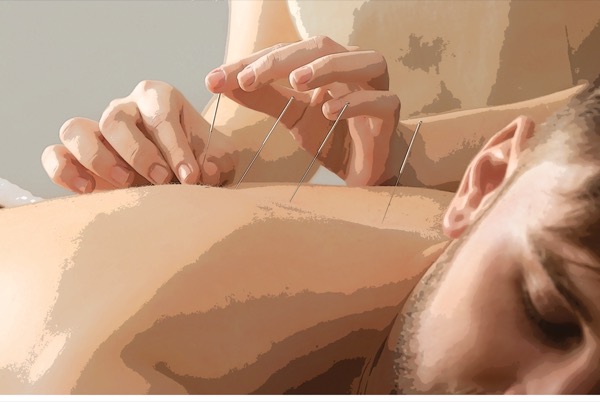

A course of acupuncture reduced pain from sciatica and improved functioning, in a sham-controlled trial that demonstrated relief at four weeks and a degree of efficacy persisting over 52 weeks (JAMA Intern Med 2024 Oct 14.).

“Given the very large effect sizes that our trial shows and the nature of acupuncture as a nonpharmacologic therapy, I think that acupuncture should be provided as first-line treatment before painkillers and surgery,” principal investigator Cun-Zhi Liu, MD, PhD, of the School of Acupuncture, Moxibustion and Tuina at Beijing University of Chinese Medicine, commented to Pain Medicine News.

Evidence of the efficacy of acupressure for chronic low back pain has been sufficient for the Centers for Medicare & Medicaid Services to have covered that indication since 2020. However, the application for pain related to sciatica has not been as well researched.

“Previous studies focused on patients with low back pain, including low back pain patients with or without sciatica,” Liu explained. “Thus, we believe that the evidence for the effect of acupuncture for sciatica, especially when compared to sham acupuncture, is inadequate. Our trial provides particularly good evidence as a result of the sham control.”

image

The team’s sham procedure utilized non-acupoints, located away from the meridian targets of active treatment. The investigators describe this as a common practice for sham control in acupuncture research. Although the sham procedure involved skin puncture through only one of the needle fixating pads, to obtain the “de qi” sensation that occurs at multiple points in active treatment, a Credibility/Expectancy Questionnaire administered before treatment and blinding test at weeks 2 and 4 affirmed that blinding to the control condition was maintained.

In an accompanying and appreciative editorial (JAMA Intern Med 2024;184[12]:1425), Jerard Kneifati-Hayak, MD, MS, and Mitchell Katz, MD, characterize the sham control as “well-thought-out,” and praise the study as methodologically rigorous.

“Recent rigorous studies have moved the needle toward accepting acupuncture as an evidence-based treatment for sciatica,” the editors remarked.

Assessing Acupuncture Relief of Sciatica

In the current trial, Liu and colleagues identified 216 participants with unilateral sciatica from a herniated disc and related moderate to severe leg pain for more than three months. Candidates were excluded for a range of criteria, including severe spinal disease or severe progressive neurologic symptoms.

The participants were randomized 1:1 to a course of acupuncture or sham, both administered by licensed acupuncturists with at least three years of experience. The active treatment followed the World Health Organization’s Standard Acupuncture Point Locations. The regimen consisted of 10 acupuncture or sham sessions delivered over six weeks, with treatment frequency decreasing from three sessions per week for the first two weeks to two sessions per week for the remaining weeks.

Efficacy measures, including a visual analog scale (VAS) for leg pain, the Oswestry Disability Index (ODI), and the Sciatica Frequency Index and Sciatica Bothersomeness Index, were obtained at baseline as well as at weeks 2, 4, 8, 26 and 52.

Liu and colleagues reported that at four weeks, the VAS for leg pain decreased 30.8 mm in the acupuncture group and 14.9 mm in the sham group (mean difference, –16.0; 95% CI, –21.3 to –10.6). The ODI decreased 13.0 points in the acupuncture group and 4.9 points with the sham procedure (mean difference, –8.1; 95% CI, –11.1 to –5.1). They noted that for both the VAS and ODI, the between-group difference became apparent starting at week 2, and persisted through week 52.

The investigators noted that the difference between active and sham treatment met the minimum clinically important difference (MCID) as well as statistical significance. They pointed out that the MCID on the VAS for leg pain was 5 to 15 mm in previous trials, and that the preestablished MCID of 15 mm in this trial had been exceeded, with a mean difference of 16 mm at week 4. The preset MCID on the ODI of 7 points was also exceeded (with 8.1, 7.9 and 7.4, respectively, at four, eight and 26 weeks).

“According to the secondary analyses and our clinical experience, the age, gender, body mass index, duration of the sciatica, ODI measure, severity of leg pain or severity of back pain at baseline did not affect the effect of acupuncture,” Liu told Pain Medicine News,

“The degree of which a herniated disc presses on the nerve root—not the degree of herniation of the disc—may be an influencing factor,” Liu posited. “However, the degree of compression shown in the MRI and the pain reported by patients were not completely consistent. We will further explore the other (potential) influencing factors in the future.”

The trial demonstrated that acupuncture reduces pain and improves function for patients with sciatica, and the investigators urge its increased application. “Acupuncture should be considered as a potential treatment option for patients with chronic sciatica from a herniated disc,” Liu and colleagues concluded.

This assessment is shared by Molly Candon, PhD, an assistant professor in the Department of Psychiatry at the Perelman School of Medicine, in the Department of Health Care Management, Wharton School, and Leonard Davis Institute of Health Economics, University of Pennsylvania, in Philadelphia.

“Insurance coverage for acupuncture is less common than insurance coverage for treatments like physical therapy and chiropractic care. I hope that insurers pay attention to this study, which adds to the robust evidence base of acupuncture’s effectiveness for ... pain,” Candon said.

“This study focuses on sciatica, but acupuncture is effective for joint conditions, headaches and other types of acute and chronic pain,” Candon noted. “Right now, Medicare only covers acupuncture for chronic low back pain, so even if insurers cover acupuncture, there can be restrictions on use.”

—Kenneth Bender

Related Keywords