

×
ADVERTISEMENT

OCTOBER 24, 2023

Electronic Distractions in Healthcare


Originally published by our sister publication Anesthesiology News

By Peter J. Papadakos, MD, FCCM, FCCP, FAARC

It has been 12 years since I published a commentary titled “Electronic Distraction an Unmeasured Variable in Modern Medicine” in Anesthesiology News (November 2011). This piece was at the core of a front-page story that appeared in the New York Times (bit.ly/44Iq1Jk) and ignited a firestorm of media coverage. Professionals in all fields of medicine addressed this issue at

Originally published by our sister publication Anesthesiology News

By Peter J. Papadakos, MD, FCCM, FCCP, FAARC

It has been 12 years since I published a commentary titled “Electronic Distraction an Unmeasured Variable in Modern Medicine” in Anesthesiology News (November 2011). This piece was at the core of a front-page story that appeared in the New York Times (bit.ly/44Iq1Jk) and ignited a firestorm of media coverage. Professionals in all fields of medicine addressed this issue at both national and international conferences; many articles were written; studies and research were done; and education was provided in almost every field of healthcare. This distraction was also addressed by the legal profession, with it becoming a core issue in litigation of malpractice. Standards and guidelines were developed by hospitals and medical societies to address this “problem” and attempt to bring the focus back to the care of patients, as well as reinforce professionalism and humanism in our professions.

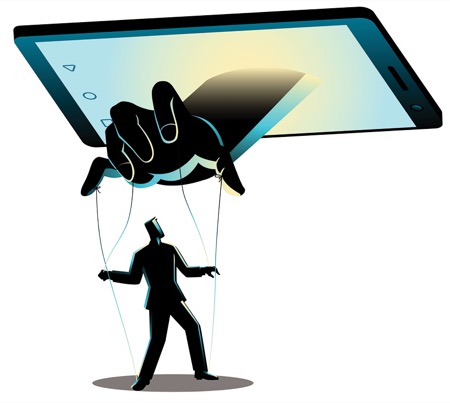
However, as I look around, I see the problem is only getting worse and we are losing ground at a rapid pace. Our culture and societal norms have changed, and our world is now populated by individuals whose entire life revolves around tech and social media. Just look around your place of work, home and community. It is not uncommon to see people walking the halls and streets holding these devices and texting, and interacting with social media for the majority of their waking hours. We all know that this explosion of technology has greatly affected us, with a rise in depression, broken social interactions, burnout and many more issues. Furthermore, accidents caused by distracted individuals have led to an increase in injury and death. So, this issue of electronic distraction continues to be a plague in both healthcare and our society in general.

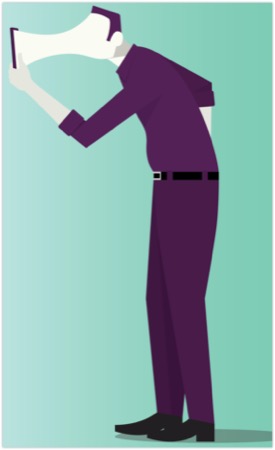
We as health professionals must again review how our behavior and practice are affected in this tech-controlled world. Since the original commentary, scientist and behavioral experts have learned that these devices and the social media they support are highly addictive. They are known to affect the neurochemistry of our brain through dopamine pathways; multiple studies using MRI have told us they excite pathways that give us central brain pleasure. They affect top-down and bottom-up triggers in how we react to stimuli, and they cause impairment in our reaction times to many external stimuli. Many times, inattentional blindness occurs as we become so captivated by what we are looking at that we shut out everything else. We know that this inattentional blindness is at the root of many traffic accidents, but may also be adding to the increase in medical errors and near misses that have been reported by various safety agencies over the past few years.

You would think with all this new information, we in healthcare should be working to address this issue. But no, our work environment and institutions have also become electronic workspaces, with more and more technology being added daily to distract us from direct patient care. Many hospitals and health facilities now have massive information technology departments and spend millions on computers. We all now work with electronic medical records (EMRs) that take us away from the bedside, as if the patient data on the computer were more a measure of care than the actual care the patient is getting. Study after study has shown that more and more time is now being spent working on the electronic records than time with patients, and how many signs and symptoms are being missed every single day.

image

The workday for doctors and nurses has become an endless battle to enter more and more information, and answer more and more guideline questions. The majority of us feel that we have simply become data entry technicians. Our professional workday no longer ends when we leave our practice or the hospital; many of us continue our interaction with the EMR at home, well into the night. This, of course, affects our family and social life with dinners and social events missed, which has led to a massive increase in burnout, early retirement, and decay of our social and personal lives, and may be at the core of the growing issue of staffing problems across all healthcare professions. Over the last few years, we have noted the lack of staff and hospital and facility closures.

Our tech experts in healthcare whose lives revolve around screen time and “improving the technology” are only making things worse with endless upgrades. Improved iChat technology has become a dominant issue in that texting has replaced spoken and face-to-face interactions in our world. Now instead of being paged or called on the phone with an issue, we get a text within the electronic record because the expectation is, ‘Of course you are looking at an open computer screen and not actually providing patient care for the majority of your workday.’ I believe that this mode of medical communication will cause an explosion of negative outcomes due to delays in addressing important issues. We predict a rise of legal issues since these interactions may be discoverable and may be at the core of questioning: “But doctor, the nurse messaged you about the low blood pressure and fall in oxygen saturation and you never responded.” “I was not on duty; I forgot to turn off my notification window.” Maybe a STAT page would have been a better idea, or rather even a call so you could communicate who the coverage is, like how it’s been done in medicine for more than 100 years.

img-button

The newest issue gaining traction in healthcare is artificial intelligence, which again is based on separating us from the human interaction that is at the core of our careers and why many of us first entered healthcare. I see a grim future in which patients interact with a computer-generated “practitioner” that informs them of their disease, care plan and prognosis, and is devoid of compassion. Since the dawn of medicine, the practitioner has been at the bedside to comfort and provide support to the patient and their families. I believe that patients still prefer to relate to fellow humans and not machine models during times of illness and crisis. Life and death is not a video game.

Additionally, providers need to be at the forefront of telling tech companies what works and does not work in patient care. We need to re-engineer and change the EMR system to make it a better tool and not a massive block of data that rules our professional lives. We need to educate our students and residents about electronic distractions in healthcare, and how they affect both the user and more importantly our patients. All of us must advocate for humanity and compassion. The education of our society on how we must all balance tech and all its aspects with reality falls on all our shoulders. Negative effects of the constant interaction with social media should be part of the education system we expose our youth to. Healthcare providers must all actively work to address these important issues, or our professions will die in front of a computer screen.


Papadakos is a professor of anesthesiology and perioperative medicine, surgery, neurology and neurosurgery at the University of Rochester Medical Center, in Rochester, N.Y. He also serves as the director of critical care medicine.

Papadakos is a member of the Anesthesiology News editorial advisory board. He, along with Stephen Bertman, PhD, edited the book “Distracted Doctoring: Returning to Patient-Centered Care in the Digital Age” (Springer, 2017).

Editor’s note: The views expressed in this commentary belong to the author and do not necessarily reflect those of the publication.