

Originally published by our sister publication Anesthesiology News
We read with interest the article by Dr.
SEPTEMBER 22, 2023
Originally published by our sister publication Anesthesiology News

We read with interest the article by Dr.

Originally published by our sister publication Anesthesiology News
We read with interest the article by Dr. Sherer regarding taking call in the specialty of anesthesiology.
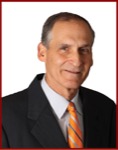
Anesthesiology is an extensive profession that offers anesthesiologists varied practice types. From pain management to critical care, from working in an ambulatory center or private plastic surgeon’s office to ORs and ICUs, anesthesiologists provide care in many settings.
We agree that there are many individual choices that anesthesiologists must make to find fulfillment, financial stability and longevity. Beyond residency, taking call is one of those choices that is not unique to any physician specialty. However, we also believe that Dr. Sherer’s depiction of avoiding call is unnecessarily simplistic and solidifies biases held by other physicians and the public.
Though undoubtedly published with good intentions, we seriously question its value to the future of our specialty. We agree that while caring for our patients overnight and on holidays and weekends may encroach on our personal time, vulnerable patient care is needed at all hours of the day, and this article promotes a simple “arbitrary construct,” in which no possible decision to take call could be reached without first considering monetary compensation.
Of course, we are not so naive or idealistic as to suggest that money is unimportant, but distilling this decision to “career-related consumerism” is completely missing the point. Many of us, daily, observe colleagues remaining past their assigned time to maintain continuity of care for the safety and well-being of their patients. Whether in academics or private practice, we knowingly chose anesthesiology for the well-rounded, perioperative medicine specialty that it is and for all that comes along with it.
After discussing the monetary motivation for taking call, Dr. Sherer makes several rather specious arguments, namely that call will lead to burnout, medical malpractice and medical errors. As Simon Sinek [an author and inspirational speaker] once said, “Working hard for something we do not care about is called stress; working hard for something we love is called passion.” As such, we take issue with this simplistic narrative and the seeming reduction of the anesthesiologist to a shift worker rather than a professional calling, unconcerned with continuity of care and adverse outcomes associated with patient handoffs. Taking call is an invaluable experience, particularly early in one’s career, and often necessary to meet patients’ needs.
As alluded to in the article, call can take many forms and be reduced in frequency over time to balance personal and professional priorities. With the ongoing shortage of physicians and the needs of patients growing, marginalization of our responsibilities to those that need it most at all hours of the day, even when inconvenient, is not the message that needs to go out from our publications. We implore Anesthesiology News to focus on matters that will inspire and spark interest while promoting the future of anesthesiology.
In his recent column, Dr. Sherer presumes that there is a cohort of U.S. anesthesiologists who continue to take call even though they don’t need the money. In my 25+ years of experience, I have found that such anesthesiologists simply do not exist. Most that I have known typically say, “I really don’t like call, but I do it,” or “I really, really hate call, and will do anything to avoid it.” So, instead of trying to convince the “unicorn” that they don’t need to take call, perhaps it’s better to address why so many dislike it in the first place.
There was a time when the fiduciary duty to your patients, your practice and the hospital dictated that you took your fair share of call. But with many groups now owned by national staffing companies (funded by private equity), or corporate hospitals forced to merge to stay competitive, our sense of duty and commitment to those entities has understandably waned. Add to that the onerous nature of what we are asked to do at night: the trauma orthopedist who insists on working until 2:30 a.m. on Thursday because he wants Friday off; the general surgeon who demands to do a non-emergent case at 5 a.m. because he has clinic at 8 a.m; or the uncomplicated G5 parturient who is talked into a midnight epidural even though she didn’t need one for her other four deliveries (all have happened to me recently). When you combine who we are working for with the unreasonable nature of what we are asked to do, it’s not surprising that the vast majority of us would prefer to avoid call altogether.
However, this ignores the inconvenient reality of call: if not us, then who? Alas, there is a cohort of individuals with less training and experience who are more than willing to take call for the compensation. And that fiduciary duty to our patients still exists, whether we like it or not. The five-year-old child who needs an emergent appendectomy at midnight deserves the education, training and experience that we all gained in medical school, residency and our years of practice. With the explosion of ambulatory surgery centers and free-standing facilities, the chance to avoid call is more available now than it ever has been. However, making that decision so early in one’s career deprives a vulnerable patient of the one person they need most: the best anesthesiologist to get them through that surgery.
Riddell practices (and takes call) at hospitals in Vermont and New Hampshire. He reported no relevant financial disclosures.

I believe Dr. Riddell has missed some crucial points. He says anesthesiologists who continue to take call even though they do not need the money “simply do not exist.” I beg to differ. First, humans are creatures of habit; “that’s the way it’s always been done” might well be their subconscious mantra. This mindless and machismo posture, an overarching theme in medicine in general, drives these attitudes. Second, implying that these doctors “need the money” is hard to believe in a specialty where the median income now exceeds $400,000 per year. We all tend, once a certain high level of income is achieved, to feel compelled to maintain a lifestyle inherent in that earning power. To say that people need that level of income to support whatever financial burdens they bear—or create for themselves—is, for the most part, beyond credibility.
He mentions “the onerous nature of what we are asked to do at night” and “if not us then who?” in reference to night work. As I mentioned in my original article, physician anesthesiologist night shifts—starting say at 11 p.m. and ending at 7 a.m.—are more humane, reasonable and probably safer, and should be the norm in our specialty. (That should satisfy Dr. Riddell that his 5-year-old appendix patient “will be in safe hands after dark.” Safer still will the child be because the doctor will not have worked 20 hours already.) The weekends can be covered in many cases by 12-hour shifts: 7 a.m. to 7 p.m., and 7 p.m. to 7 a.m. This model can demand creativity and sacrifice, but for many practices, this can work.
With regard to the reactions of Dr. Anca et al, I am reminded of what my favorite philosopher Marcus Aurelius had to say: “Remember that all things are only opinion and that it is in your power to think as you please.”
The following findings of scientific inquiry and related public policy lend further fuel to the fact that our traditional concept of extended hours of call demands reconsideration, and that my “specious arguments” regarding “burnout, medical errors and medical malpractice,” when carefully considered, actually have science behind them. For it is through science, and not mere opinion, that we can approach the reason-based answers we seek. Consider:
In the Journal of Anaesthesiology Clinical Pharmacology, Sinha, Singh and Tewari categorically state, based on their research and scientific inquiry, “Fatigue in anesthesia providers is an issue that needs urgent appraisal. If patients’ safety is our ulterior motive let us not be naÏve to jeopardize it by being oblivious to the impact of sleep deficit” (2013;29[2]:151-159).
There is a reason that Federal Aviation Administration regulations restrict pilots to 36 flight hours per week (the length of my call day in my first job out of residency!), 100 hours in 28 days and 1,000 hours in a 365-day period. Patients deserve the same vigilance from anesthesiologists that passengers demand from pilots.
I contend that the form of noble “passion” that Drs. Anca et al refer to is of little use if this passion can harm both patient and practitioner alike. Burned out and fatigued, error-prone anesthesiologists are exactly what we do not need in an environment of “ongoing physician shortages and the needs of patients growing.” I urge you to read the articles and draw your own conclusions.
One reader called me a “moral midget” for “ducking call.” Another chairman of a prominent anesthesia department was “saddened” to read my viewpoint. I am unbowed and unimpressed. In 1865, slavery was overturned in our country. Women got the vote in 1920. Resident hours were cut in 2003. (Read about the Libby Zion case and the Bell Commission that was instrumental in this [J Am Coll Cardiol 2014;64(25):2802-2804]). Change and evolution are inevitable. No other profession, with few exceptions, works these ridiculous hours, jeopardizing the very people we serve. It is high time we rethink ‘call.’
Sherer is a retired anesthesiologist from Chevy Chase, Md.
Editor’s note: The views expressed in this commentary belong to the authors and do not necessarily reflect those of the publication.