

×
ADVERTISEMENT

APRIL 17, 2025

Letter: A First-Hand Perspective on Post-Covid Pain

img-button

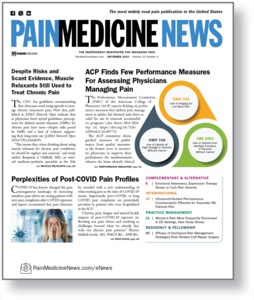
As both a pain specialist and someone who has had long-haul COVID since February 2023, I am writing in regard to the article posted on Dec. 16, 2024, titled “Perplexities of Post-Covid Pain Profiled” (Pain Medicine News December 2024, page 1).

I am happy to see this topic presented in news directed at pain professionals, as long COVID can overlap with chronic pain. The paradigms for rehabilitation also overlap in some cases, but are in direct conflict in those experiencing


img-button

As both a pain specialist and someone who has had long-haul COVID since February 2023, I am writing in regard to the article posted on Dec. 16, 2024, titled “Perplexities of Post-Covid Pain Profiled” (Pain Medicine News December 2024, page 1).

I am happy to see this topic presented in news directed at pain professionals, as long COVID can overlap with chronic pain. The paradigms for rehabilitation also overlap in some cases, but are in direct conflict in those experiencing post-exertional malaise (PEM) as part of their symptoms. In one study, by Davis et al, up to 89% of subjects with long COVID reported symptoms of PEM,1 and it is for this reason I am writing.

The article quotes Ms. Mallick-Searle in recommending progressive physical therapy, also called graded exercise therapy (GET), which is a mainstay of chronic pain rehabilitation to avoid or correct deconditioning and improve function. In chronic pain treatment, we often say function precedes pain control, and so encourage patients to work through or despite symptoms. This approach in a person with PEM will worsen their condition and prolong their recovery.

PEM is a result of the mitochondrial dysfunction mentioned in the article. It is a condition in which 12 to 48 hours after physical, mental, emotional or sensory exertion, the person experiences any or all the following symptoms: fatigue, brain fog, muscle and/or joint pain, nausea, vomiting, chills, cough, sore throat and others. This is referred to as post-exertional symptom exacerbation. A study by Appleman et al2 demonstrated that overexertion in this population can “worsen myopathy and tissue infiltration of amyloid-containing deposits.”

image

Gloeckl et al3 recommend against GET in people with long COVID with PEM. I have personal experience of using GET for my own rehabilitation during my first year of long COVID when I was getting little to no medical support. I leaned into my pain training to try to rehabilitate myself. Also, original post-COVID rehabilitation recommendations included GET.

I thought that I had some immunologic compromise, as I was “sick” every four to five days and sick enough to miss work with sore throat, flu-like or cold-like illness about every two weeks. It wasn’t until the beginning of 2024, when I entered the interdisciplinary Long Covid Clinic at the University of Colorado, that I was diagnosed with PEM.

The treatment regimen shocked me. I was told to stop everything and to rest physically, mentally, emotionally, sensorily and spiritually—basically, do literally nothing to stop the “push/crash” cycles, otherwise known as PEM exacerbations. I was told to “pace,” and learn to live within my “energy envelope.” This paradigm shift conflicted with everything I had learned for chronic pain rehabilitation and my personal way of living.

The Gloekl et al article recommends evaluating every patient with long COVID for PEM before starting GET so as not to worsen their symptoms and slow their recovery. They include guidelines for evaluation and treatment for long COVID patients without PEM, those with mild to moderate PEM, and those with severe PEM. Long COVID with PEM is completely different from chronic pain, although chronic pain can be a major symptom. The rehabilitation recommendations can be in direct conflict with usual chronic pain rehabilitation. I would recommend every pain professional who is seeing patients with long COVID learn to evaluate patients for PEM prior to prescribing GET, and individualize treatment accordingly.

I am sorry that you are receiving this letter two months after the article I am referring to was published. As someone with PEM, I have been challenged to have the energy to write this letter properly.

Thank you for allowing me to share this information.

—Teri Reyburn-Orne, MSN, PPCNP-BC, CPNP-AC, PMGT-BC, AP-PMN

References

  1. Davis HE, Assaf GS, McCorkell L, et al. Characterizing long COVID in an international cohort: 7 months of symptoms and their impact. EClinicalMedicine. 2021;38:101019.
  2. Appelman B, Charlton BT, Goulding RP, et al. Reply: Muscle abnormalities in long COVID. Nat Commun. 2025;16:1491.
  3. Gloeckl R, Zwick RH, FÜrlinger U, et al. Practical recommendations for exercise training in patients with long COVID with or without post-exertional malaise: a best practice proposal. Sports Med Open. 2024;10(1):47.

Related Keywords