

×
ADVERTISEMENT

MARCH 17, 2025

Bourbon Street Terror Attack Reinforces Need for Mass Casualty Protocol, Preparedness


Originally published by our sister publication Anesthesiology News

Matthew Eng, MD
Medical Director, Anesthesiology
Director, Perioperative Services
University Medical Center New Orleans
Associate Professor, Department of Anesthesiology
Louisiana State University (LSU) Health Sciences Center New Orleans
John Helmstetter, MD
Assistant Professor
Associate Program Director
Department of Anesthesiology
Taylor Ward, MD
Resident
Emily Young, MD
Resident
LSU Health Sciences Center Anesthesiology


The Bourbon Street


Originally published by our sister publication Anesthesiology News

Matthew Eng, MD
Medical Director, Anesthesiology
Director, Perioperative Services
University Medical Center New Orleans
Associate Professor, Department of Anesthesiology
Louisiana State University (LSU) Health Sciences Center New Orleans
John Helmstetter, MD
Assistant Professor
Associate Program Director
Department of Anesthesiology
Taylor Ward, MD
Resident
Emily Young, MD
Resident
LSU Health Sciences Center Anesthesiology


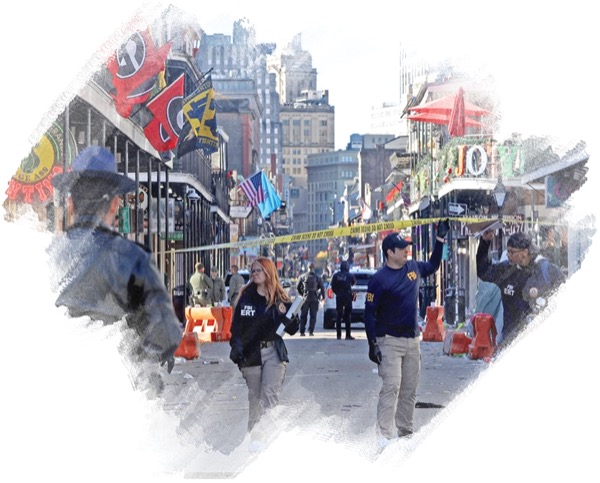
The Bourbon Street attack on Jan. 1, 2025, was a horrific event that affected countless lives in New Orleans. As the city’s Level 1 trauma center, University Medical Center New Orleans became the focal point of the medical response, receiving a majority of the victims. Our group, Louisiana State University’s Department of Anesthesiology, was in the midst of a true mass casualty incident as the critically ill patients began to flood our emergency department (ED).
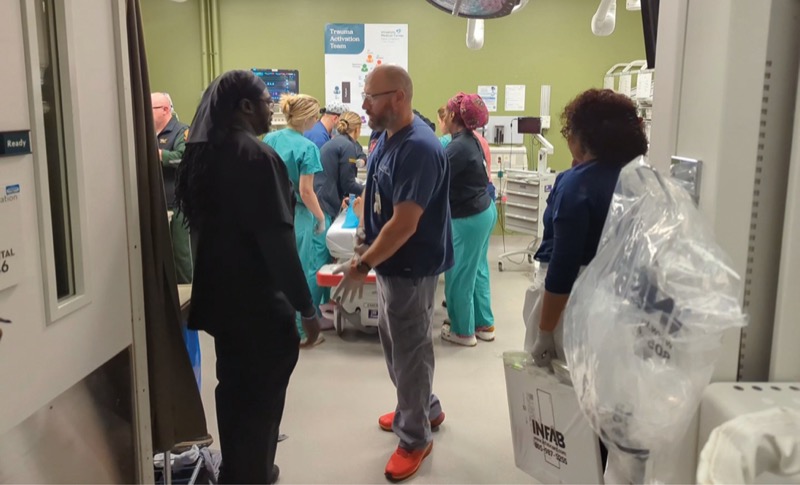
The attack, which occurred during New Year’s Eve festivities, sent shockwaves throughout the city and beyond. Within an hour, the medical center was overwhelmed with severely injured patients. The anesthesia department responded swiftly, mobilizing its team to provide essential care. In the ED, staff collaborated with trauma teams to stabilize patients, manage airways, secure vascular access and administer pain control. Orlando Salinas, MD, the anesthesiologist on duty, and the PACU nurses were among the first responders, providing immediate assistance in the trauma bays.

While our hospital has had mass casualty events in the past, this was one of the worst ones in recent memory. It was surreal to see patients coming through the ED with marks on their foreheads from the triage that was done at the scene of the attack. Patients who required surgery were stabilized swiftly by the trauma surgeons and anesthesia team.

After the mass casualty protocol was triggered, more anesthesiologists and surgeons made their way to the hospital. John Helmstetter, MD, was the anesthesiologist in charge of the ORs; extra OR teams were called in, and multiple surgeries occurred at once to stabilize the rest of the patients. Anesthesia residents were also activated, placing arterial lines and central lines, performing intubations, and sedating patients in the ICU for further procedures. Taylor Ward, MD, assisted with perioperative duties, while Emily Young, MD, assisted with the admission of patients to the trauma ICU. Outside the ICU, dozens of family members filled the waiting areas anxiously awaiting news of their loved ones, who were either still in surgery or in the process of being stabilized—most in critical condition. The tension in the air was palpable as these families grappled with the uncertainty of what had just occurred and the fate of their loved ones. The sight of so many young patients was striking. The care team worked relentlessly to stabilize every single patient, providing families with updates at every stage. This experience served as a poignant reminder that behind every patient we treat, there are mothers, fathers, siblings and friends who share in the hope and fear of the journey ahead.

image

Beyond direct patient care, the anesthesia department’s leadership was essential in resource allocation, triage decisions and interdepartmental communication. Their ability to maintain coordination under extreme pressure was critical to the hospital’s effective response. This coordinated response was made possible by the hospital’s investment in preparedness, including mass casualty drills and simulations, many of which were conducted in anticipation of New Orleans hosting Super Bowl LIX.

In the aftermath of the attack, the anesthesia department continued to provide care for patients with severe injuries, including specialized pain management and postoperative care. Recognizing the psychological impact on healthcare providers, they also offered trauma counseling and debriefing sessions.

image

The Bourbon Street attack highlighted the critical importance of collaboration between hospitals, city officials and first responders. It also emphasized the value of preparedness, ongoing education and interdisciplinary teamwork in responding to large-scale emergencies. Our hospital has experienced many mass casualties, but has always been prepared due to our simulation labs and real-world simulations. Our continued preparation and experiences have not only improved our skills but also decreased our patients’ risk for morbidity and mortality. We also reinforced the importance of having backup call for our anesthesiologists, as well as for our nurse anesthetists. We also found that our communication between trauma surgeons, anesthesiologists, emergency medicine physicians, nursing staff and administration was very strong during this event, which ultimately led to improved patient outcomes. We will continue to improve with continuing medical education, further simulation and mass casualty drills.

The attack was a devastating tragedy, but the physician response demonstrated remarkable resilience, expertise and compassion. Their actions serve as a powerful example of the strength and determination required to confront and overcome unimaginable challenges. The experience also underscored the importance of continued investment in preparedness and the profound impact anesthesiologists have in responding to mass casualty events.

Related Keywords