

×
ADVERTISEMENT

AUGUST 26, 2025

New Study Looks at Preventing Chronic Pain After Whiplash Injury

New research suggests within three days of a whiplash injury, clinicians can predict which patients will develop chronic pain based on the extent of “cross talk” between two regions of the brain and the person’s anxiety level after the injury (Nat Ment Health 2024;2:1362-1370).

The study, conducted at the Technion – Israel Institute of Technology, Northwestern University and McGill University, included more than 200 whiplash patients, 177 of whom completed functional MRI
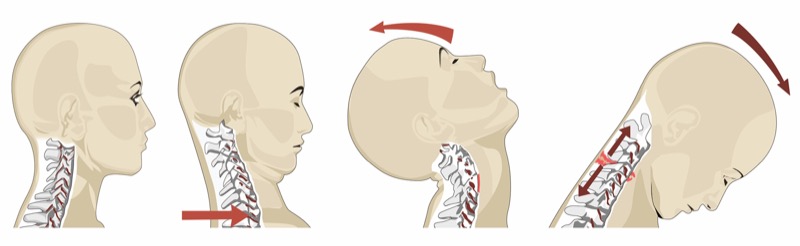

New research suggests within three days of a whiplash injury, clinicians can predict which patients will develop chronic pain based on the extent of “cross talk” between two regions of the brain and the person’s anxiety level after the injury (Nat Ment Health 2024;2:1362-1370).

The study, conducted at the Technion – Israel Institute of Technology, Northwestern University and McGill University, included more than 200 whiplash patients, 177 of whom completed functional MRI testing within three days of their injuries.

Study participants were followed over the course of 12 months to assess pain levels and track which individuals developed chronic pain and which ones recovered. Participants also had different psychological and psychophysical tests to assess pain and anxiety.

Based on imaging, the more the hippocampus interacted with the cortex, the more likely the person was to develop chronic pain. Also, the higher a person’s anxiety level immediately after a motor vehicle accident, the more precisely scientists could predict the chronic pain reported one year after the accident.

The reason for this is the communication between the hippocampus and cortex is thought to be “indexing” the formation of new memories related to the participants’ accident and pain, said Paulo Branco, PhD, the first author of the study and an assistant professor of anesthesiology and pain medicine at Northwestern University Feinberg School of Medicine, in Chicago.

The researchers hypothesize that the brains of these individuals have encoded strong memories associating a head and neck movement with pain.

“This creates expectations and associations,” Branco said. “If the memory has high emotional significance, then it makes these patients associate this movement with pain. When the brain receives these signals, it pays more attention to them based on the painful memories that were formed by the accident.”

Branco said while typically we think of pain as relating only to an injury, “it’s the brain that actually makes up the pain experience.” The brain, said Branco, makes the decision about whether a movement should be painful or not, and we think this may rely on previous experiences stored in memory.”

Apkar V. Apkarian, PhD, the director of the Center for Translational Pain Research and a professor of neuroscience at Feinberg, who is also a corresponding author on the study, said “knowing this is the critical time period for ‘pain decision,’ we can focus our treatment efforts at this early stage to prevent chronic pain rather than try to cure it later, which is much more difficult.”

Apkarian added that since anxiety plays an important role for the brain changes, targeting the anxiety immediately after the injury may be able to halt these changes, possibly through anti-anxiety drugs or other medications.

“Future novel treatments targeting hippocampal activity and connectivity through pharmacology or through neuromodulation techniques also are possible,” Apkarian said.

In the United States, approximately 3.3 million adults suffer from chronic pain after whiplash injury, and many more from other chronic pain conditions. Since many treatments are not effective, many chronic pain patients are prescribed opioids, which may not only offer relief but can be addicting.

The study authors next plan to explore the underlying mechanisms behind the hippocampal response to injury by assessing which additional physiologic (cortisol, inflammation) and psychological (trauma and stress-related disorders, fear of movement) factors may be driving the brain mechanisms. Treatments they hope to test include medication, cognitive behavioral therapy and transcranial magnetic stimulation.

Thelma Wright, MD, an anesthesiologist and a pain medicine specialist at the University of Maryland Medical System, in Baltimore, who was not involved in the study, said, “Pain is subjective, and we don’t know if we can use the same paintbrush on everyone.

“There are so many different factors that go into the development of chronic pain,” said Wright, “including history, injury and socioeconomic factors. So based on the study, would you give everyone anti-anxiety medication, and if so, for how long?”

One addendum to the study, Wright said, might be to give patients enrolled in the trial a questionnaire before surgery. And if a patient indicates they have never experienced chronic pain or anxiety, perhaps limit imaging to that population to determine whether brain changes develop and its treatment might be effective for preventing the development of chronic pain.

—Francesca Kritz

Related Keywords