

×
ADVERTISEMENT

AUGUST 14, 2023

Multimodal Treatments May Solve Morphine Shortages in the Developing World

Across developing countries, a short supply of morphine limits doctors’ options for treating severe pain. A new study suggests a combination of nalbuphine and ketamine—which are more plentiful in low-income countries—could be used in combination to treat pain when morphine is unavailable.

In a study of women undergoing elective, moderate to major gynecologic procedures in Pakistan, pain scores after one hour in the recovery room of patients treated with morphine were a mean of
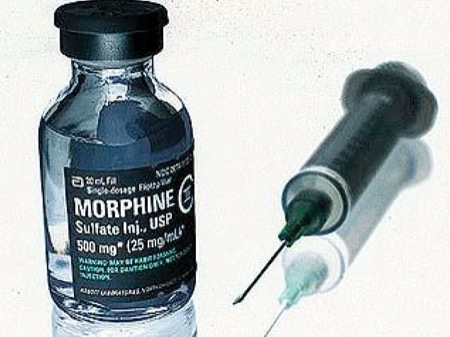

Across developing countries, a short supply of morphine limits doctors’ options for treating severe pain. A new study suggests a combination of nalbuphine and ketamine—which are more plentiful in low-income countries—could be used in combination to treat pain when morphine is unavailable.

In a study of women undergoing elective, moderate to major gynecologic procedures in Pakistan, pain scores after one hour in the recovery room of patients treated with morphine were a mean of 3.22. In comparison, those treated with the combination of nalbuphine and ketamine had a mean pain score of 4.47 (P=0.029).
“In our study, the equipotent doses of ketamine and nalbuphine were as good at delivering pain relief as morphine, except at only one point: that is in the immediate postoperative period. But at all other study points, there was no statistically significant difference in the pain relief provided by the two different drug combinations,” said Gauhar Afshan, MD, of the Department of Anesthesiology at Aga Khan University Hospital, in Karachi, Pakistan, and lead study co-author. She presented the results in a poster at the 2022 International Association for the Study of Pain Conference, in Toronto.

Afshan explained the possible difference in postoperative pain scores in two ways. “Normally, we give morphine or nalbuphine with startup anesthesia; both drug regimens are administered before surgery starts. While patients are being operated on, we can only indirectly monitor pain, through looking at heart rate and blood pressure. When patients wake up in the recovery room for the first time, it is likely that the pain-killing effects of nalbuphine and ketamine have subsided sooner than those of morphine. Additionally, we hypothesized that immediate postoperative anxiety could lead to the reporting of higher pain scores.”

image

The motivation for the study was the fact that developing countries produce 70% of the morphine in the world but use only 30% of the morphine they produce. This leads to a situation in which in many low-income nations, morphine is only used universally for very painful procedures like bypass surgery or in high-risk patients.

“If my patient is not old and does not have comorbidities like hypertension or diabetes, then I would rather not use morphine, even if it would be the gold standard for pain relief,” Afshan said. “I might need morphine for my sicker patient, older patient.” She explained further that the limited supply of morphine is also caused by the strict regulations of the Pakistan Narcotics Control Board, which requires meticulous record keeping whenever narcotics are prescribed.

The double-blind, randomized controlled trial included women 18 to 59 years of age (mean, 43.65 years) and a mean body weight of 69.84 kg. Two groups of 32 patients were included in the study; both were given standard general anesthesia with ketamine 0.3 mg/kg IV. Group M was administered 0.1 mg/kg of morphine and group N was given 0.1 mg/kg of nalbuphine. Both groups received propofol 2 mg/kg, followed by an intubating dose of atracurium 0.5 mg/kg. In the recovery room, patient-controlled analgesia of the study drug in both groups was started. Intravenous acetophenone, 1 g every six hours, also was given to all patients in the 24 hours following surgery. Patients’ pain was assessed by using visual analog scale score at 30 minutes and four, 16 and 24 hours after surgery.

The researchers acknowledged several limitations of their study, most importantly that the small sample size meant further studies are needed to confirm the results. The patients coming to the clinic at Aga Khan University are of a higher socioeconomic status than the average Pakistani person coming to a local clinic in a developing country. The researchers indicated that future studies should include patients who had never gone to a general physician before, whose possible comorbidities in relation to the use of anesthesia could be monitored.

“In some studies, nalbuphine is believed to be equianalgesic to morphine,” said Lynn R. Webster, MD, a senior fellow at the Center for U.S. Policy, in Washington, D.C., who was not associated with the study. “Adding low-dose ketamine could enhance the analgesic effect of nalbuphine.”

Despite the fact that the study was designed for low-income countries, Webster, a Pain Medicine News editorial advisory board member, noted that “the model may be applied in any country. Ketamine is a well-known drug. Nalbuphine is less known to most clinicians, but there is a robust literature on its safety and efficacy, so it may provide an alternative to pure mu-agonist analgesics.”

—Myles Starr


Webster reported no relevant financial disclosures.

Related Keywords