

×
ADVERTISEMENT

JULY 3, 2025

Multidisciplinary Group Releases PDPH Consensus Statement Guidelines

PHILADELPHIA—Despite advances in anesthesia care, the incidence of post-dural puncture headache (PDPH) remains troublingly high, affecting up to 40% of patients. Even though numerous reviews have addressed the prevention and management of PDPH, the condition is characterized by a lack of comprehensive recommendations.

To address this shortcoming, a multidisciplinary panel of 21 collaborators recently published consensus recommendations for the prevention, identification and management of
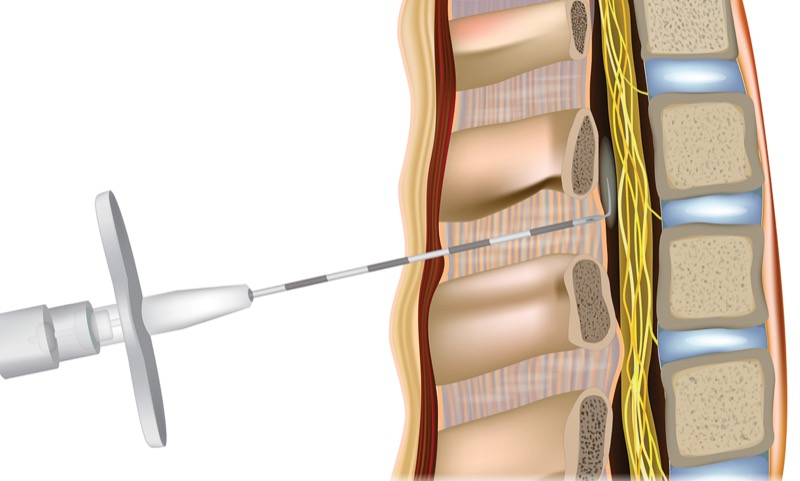

PHILADELPHIA—Despite advances in anesthesia care, the incidence of post-dural puncture headache (PDPH) remains troublingly high, affecting up to 40% of patients. Even though numerous reviews have addressed the prevention and management of PDPH, the condition is characterized by a lack of comprehensive recommendations.

To address this shortcoming, a multidisciplinary panel of 21 collaborators recently published consensus recommendations for the prevention, identification and management of PDPH (Reg Anesth Pain Med 2024;49[7]:471-501), which could ultimately improve patient care and safety. In a special symposium at the 2024 annual meeting of the American Society of Anesthesiologists (ASA) four authors discussed the guidelines and their incorporation into clinical care.

“I had the privilege to lead these guidelines, which included delegates from six professional societies [ASRA Pain Medicine, European Society of Regional Anaesthesia and Pain Therapy, Society for Obstetric Anesthesia and Perinatology, Obstetric Anaesthetists’ Association, American Society of Spine Radiology and American Interventional Headache Society],” said Vishal Uppal, MBBS, an associate professor of anesthesia, pain management and perioperative medicine at Dalhousie University, in Halifax, Nova Scotia.

As part of that process, the working group’s co-chairs developed 10 clinically relevant PDPH questions, each addressed by a subgroup of delegates who submitted structured narrative reviews and summarized their primary evidence points as statements. Practice recommendations, based on the reviewed evidence, were presented for each of the 10 questions.


When should PDPH be suspected?

The working group determined that the clinical diagnosis of PDPH should be based on the appearance of postural headache within five days of a neuraxial procedure. It is recommended that all inpatients who have undergone such a procedure be evaluated for PDPH symptoms. In contrast, outpatients should be informed about the possibility of these symptoms and instructed to report relevant signs to their healthcare providers.


What patient factors are associated with the incidence of PDPH?

“These are probably very well known to most of us,” Uppal noted, “but the guidelines talk about higher PDPH rates in younger ages, female sex and individuals with a previous history of headaches.” Body mass index is not consistently associated with PDPH, he added.


What procedural characteristics are associated with PDPH?

Eight procedural factors are associated with PDPH: needle type, needle size, needle advancement, number of attempts, operator experience level of neuraxial block, patient position, and traumatic versus atraumatic tap. Based on these variables, the authors made practice recommendations.

They recommended the routine use of non-cutting spinal needles for lumbar punctures. If a cutting needle must be used, they suggested a narrow-gauge needle. If a cutting needle is necessary, it should be inserted with the bevel parallel to the long axis of the spine.


What measures may be used to prevent PDPH?

This question generated five recommendations. The first suggested clinicians consider using an intrathecal catheter for anesthesia/analgesia following accidental dural puncture. The authors also recommended against the routine use of an epidural blood patch to prevent PDPH, due to insufficient evidence supporting its effectiveness.

Similarly, they advised against bed rest. The fourth and fifth recommendations advised against the routine use of intrathecal or epidural injections and the routine administration of systemic drugs for PDPH prophylaxis.


What conservative measures may be used to treat PDPH?

“With respect to conservative PDPH treatment, we came up with seven recommendations,” Uppal said. “The first of these was against the routine use of bed rest, although it can be used to provide symptomatic relief for headache.”

The authors did recommend hydration with oral fluids, followed by IV fluids if oral intake is not tolerated. The evidence does not support the routine use of abdominal binders or aromatherapy for PDPH treatment.

Fourth, multimodal analgesia, including acetaminophen and nonsteroidal anti-inflammatory drugs, should be offered to all PDPH patients, unless contraindicated. Short-term opioid use may be considered if patients do not respond to multimodal analgesia, but long-term opioid use is not recommended.

The sixth recommendation addressed caffeine, which can be offered in the first 24 hours, up to a maximum of 900 mg daily (200-300 mg if breastfeeding). Lastly, the evidence does not support the routine use of other medications commonly used for PDPH, such as adrenocorticotropic hormone, atropine, cosyntropin, gabapentin, hydrocortisone, methylergonovine, neostigmine, piritramide, theophylline and triptans.

The next five questions, developed by the working group, were discussed by co-author Rakesh V. Sondekoppam, MD, a clinical associate professor of anesthesiology, perioperative and pain medicine at Stanford University, in California.


What procedural interventions may be used to treat PDPH?

This question generated seven recommendations. The first two warned against the routine use of acupuncture and sphenopalatine ganglion blocks for PDPH treatment. Conversely, the guidelines suggested that greater occipital nerve blocks may be offered to patients with PDPH following spinal anesthesia with a narrow-gauge (=22) needle.

“You can do these blocks as a temporizing measure, if you don’t want to do an epidural blood patch,” Sondekoppam said. “But remember that a significant proportion of these patients will probably need a blood patch anyway.”

The fourth, fifth and sixth recommendations noted that evidence does not support the use of spinal and epidural morphine, routine epidural dextran, gelatin or hydroxyethyl starch, or the routine use of fibrin glue for PDPH treatment. Fibrin glue should only be reserved for managing PDPH refractory to epidural blood patch or when autologous blood injection is contraindicated.


Is imaging required in PDPH management?

Two recommendations emerged from this question. First, brain imaging should be considered in two circumstances: 1) when non-orthostatic headache is present or develops after an initial orthostatic headache, and 2) when headache onset occurs more than five days after a suspected dural puncture. Second, neuroimaging should be considered if patients experience focal neurologic deficits, visual changes, alterations in consciousness or seizures, particularly in the postpartum period.

“Keep those in mind and get a neurologist involved as early as possible if it’s not characteristic of PDPH,” Sondekoppam explained.


What are the contraindications to an epidural blood patch?

Two recommendations were made regarding this question. The authors advised clinicians to follow appropriate guidelines for neuraxial injections in patients receiving anti-thrombotic therapy or those with low platelet counts. They also recommended caution when considering an epidural blood patch in febrile patients or those with systemic signs of infection.


When and how should an epidural blood patch be performed?

This question led to 14 individual recommendations. The first two suggested epidural blood patches be used when conservative therapy fails or when severe neurologic symptoms are present. If the blood patch is performed within 48 hours of dural puncture, patients should be counseled about the potential need for repeat procedures, with follow-up essential to check for persistent cerebrospinal fluid leaks.

An epidural blood patch should be performed at or one level below the puncture site. If a transforaminal approach is needed, radiological guidance is recommended. Such clinical approaches should be individualized to each patient. The authors emphasized strict aseptic technique but noted that routine blood cultures are unnecessary.

Informed consent for an epidural blood patch should include risks such as back pain and neurologic complications. During the procedure, blood should be injected incrementally, monitoring for adverse events such as back pain or headache. Persistent back pain following the procedure warrants further investigation.

Finally, the authors noted that epidural analgesia and anesthesia should not be withheld from patients with a history of epidural blood patch.


What are the long-term complications of PDPH, and how should patients be followed up?

This last question generated five recommendations. The first stated that patients should be informed of potential PDPH sequelae before discharge, with appropriate follow-up arrangements. The clinician responsible for the dural puncture should ensure other practitioners are aware of the PDPH, its management and the possibility of long-term symptoms. Follow-up should continue until the headache resolves and can be managed by a primary care physician. Patients with worsening symptoms should undergo urgent neuroimaging and referral to a specialist.

“Remember that epidural blood patch is still iatrogenic epidural hematoma,” Sondekoppam concluded. “So kindly take precautions to minimize the damage.”

Although the guidelines are comprehensive, the authors noted that some recommendations are hampered by a lack of evidence. Nevertheless, they provide a valuable framework for clinicians to assess PDPH risk, confirm its diagnosis and adopt a systematic approach to its management.

—Michael Vlessides


Sondekoppam and Uppal reported no relevant financial disclosures.

Related Keywords