×
ADVERTISEMENT

JULY 25, 2025

The Surgical Management of Migraines


Originally published by our sister publication General Surgery News

img-button

Welcome to the June issue of The Surgeons’ Lounge. In this issue, Lisandro Montorfano, MD, a plastic surgery independent resident at Vanderbilt University Medical Center, in Nashville, Tenn., and Meghan Merklein, MD, a PGY-5 general surgery resident at Carle Foundation Hospital, in Urbana, Ill., interview Patrick Assi, MD, and Salam A. Kassis, MD, both plastic and reconstructive surgeons at Vanderbilt University Medical



Originally published by our sister publication General Surgery News

img-button

Welcome to the June issue of The Surgeons’ Lounge. In this issue, Lisandro Montorfano, MD, a plastic surgery independent resident at Vanderbilt University Medical Center, in Nashville, Tenn., and Meghan Merklein, MD, a PGY-5 general surgery resident at Carle Foundation Hospital, in Urbana, Ill., interview Patrick Assi, MD, and Salam A. Kassis, MD, both plastic and reconstructive surgeons at Vanderbilt University Medical Center. Drs. Assi and Kassis provide up-to-date answers to the most common questions regarding the surgical management of migraines.

img-button

We look forward to our readers’ questions and comments.

Sincerely,

Samuel Szomstein, MD, FACS
Editor, The Surgeons’ Lounge
Szomsts@ccf.org
@YANKEEDOC44


image
Lisandro Montorfano, MD

Dr. Montorfano: What role does surgery play in the management and treatment of migraine headaches?

Dr. Assi: Migraine headaches, occipital neuralgia and headaches in general all have a similar definition, but each has its own constellation of symptoms. A migraine headache is a constellation of symptoms that is not only a headache, but also accompanied by nausea, vomiting, blurred vision and lightheadedness, along with specifics in timing and duration. Migraines were initially thought to be an entirely centrally initiated phenomenon.

image
Patrick Assi, MD

Surgery plays a role in the management at the site of peripheral compression or trigger points. At these areas, there is compression from a muscle, an artery, or narrowing of a foramen such as the supratrochlear or supraorbital notch, causing irritation or damage to the peripheral nerve. Migraine surgery is essentially the carpal tunnel release of the head. Migraine surgery is not for patients who come to my office and complain of pain everywhere. Migraine surgery is for patients who present complaining of pain at a specific point, such as the back of the head, either unilaterally or bilaterally. These patients are candidates for surgery.

Almost all these patients come to my office after they have exhausted all other treatment options such as nerve stimulators, Botox (AbbVie), ganglion blocks, radiofrequency ablation and medications. They have exhausted all these modalities because this information about peripheral trigger points was not known. With radiofrequency ablation, patients had symptomatic improvement that led to neurologists accepting this as a peripherally mediated pathology and that should be treated peripherally in conjunction with surgeons.

image
Meghan Merklein, MD

Dr. Merklein: What are the types of migraine surgery? Can you describe the most common operations you perform to treat migraine headaches?

Dr. Kassis: The most common type of migraine surgery addresses the peripheral trigger points. The most common surgery that I perform is the greater occipital nerve trigger release. There are three nerves that are identified: the greater occipital nerve, the lesser occipital nerve and the third occipital nerve. A neurectomy, or transection, is typically performed on the lesser occipital nerve and the third occipital nerve. The greater occipital nerve is a nerve that we neutralize, meaning that we do not transect it because it gives sensation to the entire back of the head. When speaking with patients in the clinic, it is very important to understand where the pain starts and where it radiates. If a patient can map this out, they are likely to have very good outcomes.

image
Salam A. Kassis, MD

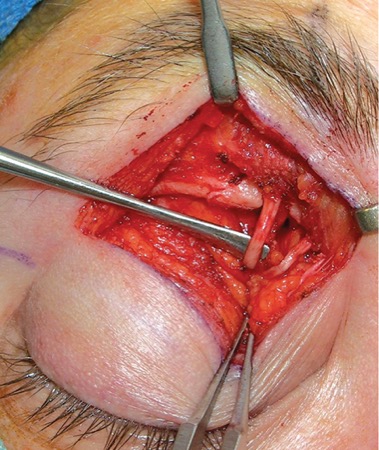
The second most common type of migraine surgery we perform is the frontal trigger point release for the supraorbital nerve. This is when patients confirm pain that starts at or above the eyebrow and can radiate toward the temples. Here, the nerve exits from the foramen and can become compressed at multiple spots, not just at the foramen itself. The nerve can also be compressed by the corrugator muscles or the fascia until it reaches the subcutaneous tissue.

The less common surgeries we perform are at the temporal trigger site that addresses the zygomaticotemporal nerve and the auriculotemporal nerve. Usually, there is a superficial temporal artery at this site that is pulsating on the nerve, which is subsequently ligated.

Finally, the most uncommon site is the rhinogenic trigger site. In this situation, the patient’s pain starts behind the eye. The underlying cause is usually secondary to rhino problems such as a deviated septum, turbinate hypertrophy and sinus polyps, among others. A CT scan is needed for surgical planning in this situation.

image
Supraorbital nerve decompression.

Dr. Montorfano: Do you consider it important to centralize care in migraine surgery centers?

Dr. Assi: Absolutely, it is a combination between the surgical team and neurology. This is a multidisciplinary approach. Every patient needs to be evaluated by a neurologist. We are the technicians. We are plastic surgeons who perform a procedure that has an anatomic relevance to treat these patients. We have a very important relationship with our neurologists. Every patient must go through a neurologist and if your neurologist is on board and educated on this procedure, a treatment option can be offered to patients for their problem. We are the final bullet for most of these patients. This is a relatively newer surgery that has only been performed for approximately 15 years, and has been accepted in the medical community for about half a decade. Not everybody is on board from the neurologists’ side, especially if they are not familiar with this type of migraine surgery.

Dr. Merklein: You have a very busy migraine surgery practice. From your perspective, how can young surgeons build a successful migraine surgery practice?

Dr. Kassis: There are multiple aspects to building an academic practice. You have to educate on the topic by teaching residents and fellows, and give lectures when possible. When educating, you need to push for policy change building societies around migraine surgery. You must also do research in the field, validate your findings and look at your outcomes. It is also important to have the volume. When you start your migraine practice, you need to be very selective and make sure your outcomes are good. Engage the public and use social media to help spread the word. Altruism is obviously important as well. Continue to work toward helping patients because there are patients out there suffering with migraine headaches, and they need to know there is hope for them. Finally, you, as a surgeon, need to reach out to your colleagues in neurosurgery, neurology, interventional pain, physical therapy and primary care to educate them on what you can offer. There are people who can help you do that at every hospital.

Dr. Montorfano: What are the latest advances in migraine surgery research? What are the outcomes?

Dr. Assi: From the research we have done so far, we have demonstrated that many of the patients’ symptoms improved more than 50%, and only approximately 8% of patients improved by less than 50%. By default, 92% demonstrated significant improvement, which is amazing. We use the MHI, or the migraine headache index, to determine success of surgery. The components factored into the MHI are frequency, duration and intensity of migraine headaches. Success is considered if the MHI improved by greater than 50% compared with the preoperative score. This demonstrates the importance of patient selection. Regarding advancements in research, we are looking at objective [characteristics] to identify these patients because right now, the assessment is subjective and determined on physical examination. We are looking at advanced diffusion tensor imaging MRI to look at the actual nerve and its characteristics. This allows us to visualize a neuroma or inflammation in these very small nerves that are unable to be detected by regular MRI. Hopefully this will become a diagnostic tool. This is not being done anywhere else in the world, which makes this very unique.