

×
ADVERTISEMENT

JULY 11, 2025

Dural Puncture Epidural Technique Deemed Superior for Labor Analgesia


Originally published by our sister publication Anesthesiology News

img-button

The dural puncture epidural (DPE) technique may offer an ideal approach for labor analgesia, according to Lawrence C. Tsen, MD, an associate professor of anesthesia at Harvard Medical School, and the director of anesthesia in the Center for Reproductive Medicine at Brigham and Women’s Hospital, both in Boston.

“Compared to a combined spinal epidural [CSE] or conventional epidural techniques, a DPE provides faster


Originally published by our sister publication Anesthesiology News

img-button

The dural puncture epidural (DPE) technique may offer an ideal approach for labor analgesia, according to Lawrence C. Tsen, MD, an associate professor of anesthesia at Harvard Medical School, and the director of anesthesia in the Center for Reproductive Medicine at Brigham and Women’s Hospital, both in Boston.

“Compared to a combined spinal epidural [CSE] or conventional epidural techniques, a DPE provides faster onset, better bilateral coverage, better sacral coverage, and no changes in high sensory blockade or post-dural puncture headache,” he said.

The DPE technique was developed in 2005 and has been tested in both animal and human clinical trials.

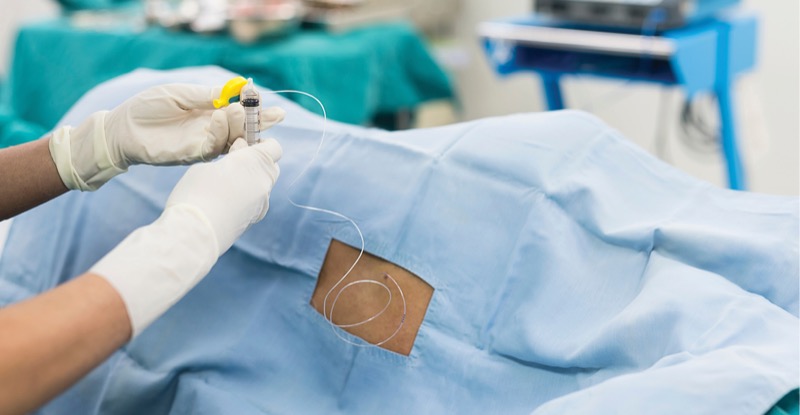
Similar to a CSE, the DPE technique involves placing a spinal needle through an epidural needle into the spinal sac; however, instead of depositing medicine, the purpose is to create a conduit between the epidural and spinal spaces. An epidural catheter is then threaded and dosed for initial and ongoing pain relief.

image

“The value of the epidural-to-spinal space conduit of the DPE technique,” Tsen said, “is the flux of medications that provide benefits, which are distinct from the CSE and traditional epidural techniques.”

He noted that the CSE more frequently results in fetal bradycardia and uterine hypertonus, compared with the DPE and epidural techniques.

A recent study also demonstrated that versus an epidural, a DPE provided faster onset from labor analgesia to surgical anesthesia in patients undergoing elective cesarean delivery (JAMA Netw Open 2023;6[8]:e2326710). The DPE technique resulted in less need for a repeated neuraxial placement, general anesthesia or alternate analgesic agents, Tsen said. “We feel the DPE technique really hits the sweet spot for labor analgesia, cesarean delivery anesthesia, or the avoidance or facilitation of other surgical procedures.”

By Ethan Covey


Tsen reported no relevant financial disclosures.