×
ADVERTISEMENT

APRIL 17, 2025

When Illicit Drugs Crash the Party, ED Pharmacists Have the Antidotes


Originally published by our sister publication Pharmacy Practice News


By Cynthia E. Keen


The title “When the Good Times Roll Too Far: An Overview of ‘Party Drug’ Management” proved to be apt for a session at the ASHP Midyear 2024 Clinical Meeting & Exhibition, in New Orleans. It attracted so much interest that not one, but two, overflow rooms were needed to accommodate the crowd.

What caused the excitement? Three emergency department (ED) clinical


Originally published by our sister publication Pharmacy Practice News


By Cynthia E. Keen


The title “When the Good Times Roll Too Far: An Overview of ‘Party Drug’ Management” proved to be apt for a session at the ASHP Midyear 2024 Clinical Meeting & Exhibition, in New Orleans. It attracted so much interest that not one, but two, overflow rooms were needed to accommodate the crowd.

What caused the excitement? Three emergency department (ED) clinical pharmacists at busy Level I trauma centers shared their experiences managing illicit drug overdose cases.
Emergency medicine pharmacists are essential members of the ED team, working side by side with emergency medicine physicians and nurses. However, overdose treatment has become increasingly challenging for ED hospital pharmacists, because the composition of drugs causing an overdose may be unknown. Drug analogs—particularly for fentanyl—are especially problematic, as toxicity symptoms may mimic those of other types of drugs.

“Patients may not know that what they ingested, or injected, wasn’t what they thought it was,” said program chair Brian W. Gilbert, PharmD, of Wesley Medical Center, in Wichita, Kan. “It may not be a patient’s intent at all to take a dose of drugs that could endanger his/her life. Get a good history, but don’t trust the history. Polypharmacy is rampant.”

image
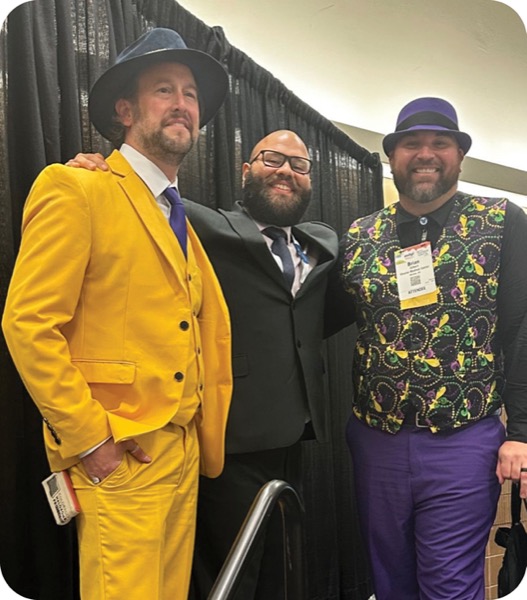
Left to right: “Party boys” Lance Ray, PharmD, Ruben D. Santiago, PharmD, and Brian W. Gilbert, PharmD, at the ASHP Midyear 2024 Clinical Meeting & Exhibition. (Dr. Santiago forgot to bring his Miami party boy outfit.)
Photo courtesy of Brian W. Gilbert, PharmD

The panelists emphasized the importance of speaking with emergency medical services teams, law enforcement officers and other “streetwise” individuals about current drugs being used in the community. This knowledge can help pharmacists make better judgments about the sources of overdoses in ED patients and how to treat them. “The [National Poison Control Center] Hotline is an incredible resource,” added Lance Ray, PharmD, of Denver Health (see box).

Poison Hotline a Valuable Resource

The National Poison Control Center’s 24-hour hotline (800-222-1222) is an important tool for emergency medicine pharmacists, providing expert advice regarding administration and dosage of overdose reversal agents, Dr. Ray said. “Center staff can help ED professionals with clinical management of a difficult case,” he emphasized. “An expert in illicit drug toxicities can guide immediate care and recommend the most appropriate anecdote(s) and dose(s). The center assigns a case number and will even call daily to follow the progress of an inpatient.”

ED pharmacists also act as counselors to their patients upon recovery and advocate for the benefits of drug testing strips. “We need to alert users to the dangers of today’s illicit drugs and what can be done to mitigate their effects in overdose situations. Our nonpunitive advice may save a life,” Dr. Gilbert stressed.

He, Dr. Ray, and fellow speaker Ruben D. Santiago, PharmD, of Jackson Memorial Hospital, in Miami, outlined several prevalent drug overdose scenarios that emergency medicine pharmacists should be prepared to encounter.

Xylazine Toxicology

image

The FDA issued a nationwide alert in late 2022 about increases in xylazine contamination in fentanyl, heroin, cocaine, methamphetamine and opioids used with stimulants (bit.ly/43q35Rg-PPN). Nearly 3,500 deaths had been reported in 2021, compared with 102 in 2018.

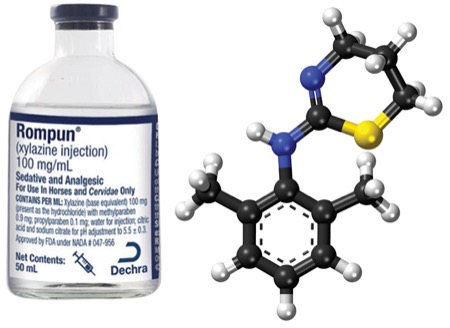
Xylazine is a nonopioid sedative agent approved for use in veterinary medicine, primarily for large-animal anesthesia or pain medicine. It acts as a central alpha-2 agonist in the brainstem, causing a rapid decrease in the release of dopamine and norepinephrine in the central nervous system (CNS), and may bind to other CNS receptors. This can cause serious, life-threatening adverse effects similar to those associated with opioid use.

Symptoms of xylazine toxicity may include difficulty breathing, dangerously low blood pressure and bradycardia. Individuals experiencing overdoses may become immobilized, enter a semi-conscious “zombie-like” state, and not respond to pain stimuli. Cardiac arrest can occur.

Patients experiencing these toxicities may be unaware that the drugs they were using—typically cocaine, heroin or fentanyl—contain this inexpensive additive, which enhances the “high” of the illicit substance. It is also difficult for clinical staff to distinguish opioid overdoses from xylazine exposure because xylazine is not detected by routine toxicology screening. And with a short half-life of approximately 30 minutes, xylazine can be difficult to test for when sample collection is delayed. Thresholds to determine xylazine toxicity levels in humans have not been established.

image

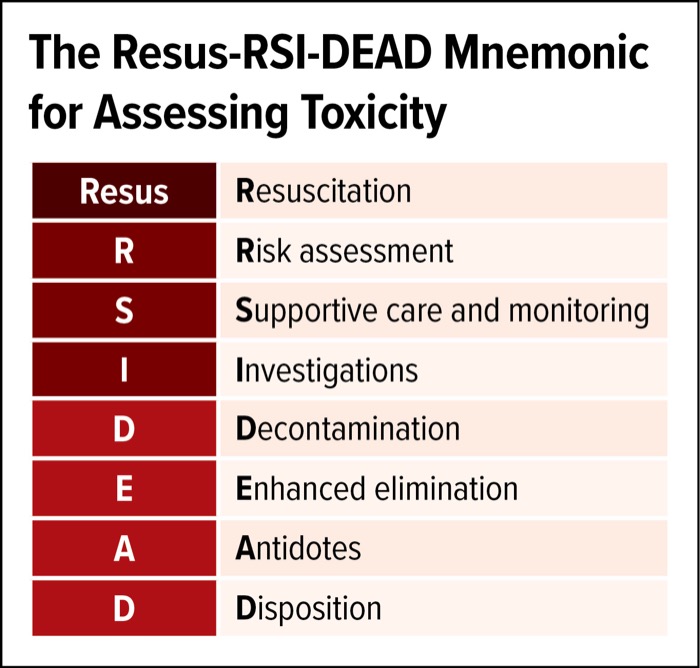
When assessing a patient suspected of xylazine toxicity, Dr. Gilbert said the ED team focuses on performing the mnemonic Resus-RSI-DEAD (resuscitation; risk assessment, supportive care and monitoring, and investigations; and decontamination, enhanced elimination, antidotes, and disposition) (Emerg Med J 2006;23[5]:396-399). He administers the opioid antagonist naloxone, starting with a dose of 0.1 mg/kg up to a cumulative dose of 10 mg.

“It is important to educate patients prior to hospital discharge about fentanyl and xylazine testing strips and where to obtain them,” he emphasized. “These aren’t drug paraphernalia. If drug users can test before they ingest, they may be making a lifesaving decision.”

Fentanyl and Its Analogs

image

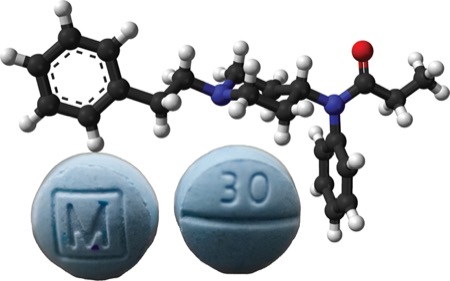
Jackson Memorial Hospital is the largest public hospital in the United States and its ED is among the busiest, with about 120,000 visits per year. The percentage of opioid overdose cases varies, often coming in waves, Dr. Santiago said. Jackson Memorial’s ED recently has experienced an increase in overdoses from fentanyl and fentanyl analogs such as acetyl/butyrl/furanyl fentanyl, carfenanil, alpha-methylfentanyl and 3-methylfentanyl. They are full agonists of the mu-opioid receptor. Clinical features after use are indistinguishable. Their increased potency is attributed to high lipophilicity, ease of crossing the blood–brain barrier, and high receptor affinity and selectivity for the mu-opioid receptor. Other drugs of concern include novel synthetic opioids and nitazenes ingested as powders, counterfeit tablets and liquids. Nitazenes, although 1,000-fold more potent than morphine, are not detectable by standard immunoassay drug testing.

“Naloxone is the antidote of choice for the management of acute opioid overdose, and the initial dose I administer, through intranasal nebulization, intramuscular injection, or intravenously, is 0.4 to 2.0 mg,” Dr. Santiago said, adding that he administers another dose if the patient does not respond within two to eight minutes. “Dosing strategy has [been] and is being evaluated in clinical studies to determine if fentanyl/fentanyl analogs require more naloxone than nonsynthetic opiates,” he continued. “Study findings to date are mixed, but the cumulative dose and outcomes tend to be the same.”

Dr. Santiago also warned of naloxone-induced pulmonary edema as a rare but life-threatening complication. It is not dose-related and has occurred in cases of naloxone administration as low as 0.8 mg (Cureus 2023;15[7]:e41642). The pulmonary edema is believed to occur due to fluid shifts resulting from catecholamine-induced vasoconstriction.

Gamma-Hydroxybutyrate Intoxication

image

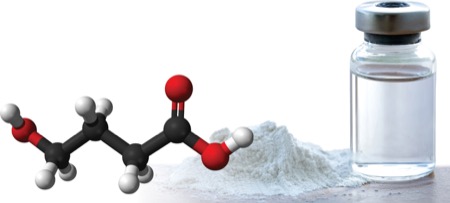
Patients experiencing drug overdoses can represent a significant percentage of the traffic Denver Health’s ED sees on a given day, Dr. Ray said. On rare occasions, he said, the overdose is caused by gamma-hydroxybutyric acid (GHB).

GHB is FDA approved to treat narcolepsy’s daytime sleepiness and muscle weakness. Its illicit use as a “party drug” peaked in the 1990s.

GHB analogs (GBL and 1,4 BD) are sold illicitly as anabolic steroid bodybuilding supplements. GHB can be added to drinks in nightclubs for drug-facilitated sexual assault. It is also used to enhance euphoria and sexual arousal in a 20- to 30-mg/kg dose.

But a slightly higher amount (40-60 mg/kg) can cause profound sedation, coma, respiratory depression, hypotension, hypothermia and even death. “Patients at Denver Health typically present with a Glasgow Coma Scale [GCS] of 3, and about 30% of those with a GCS less than 8 experience bradycardia,” Dr. Ray said. “The patient’s hallmark symptoms make this an easier-to-diagnose drug overdose.”

The basic approach to managing GHB overdose is supportive care to ensure that breathing, heart rate, and other vital signs are maintained. Other interventions are less effective. Gastrointestinal decontamination, for example, may induce vomiting and heighten the risk for aspiration pneumonia. And neither naloxone, a pure opiate antagonist, nor the selective benzodiazepine receptor antagonist flumazenil, have been shown to be effective in reversing GHB sedation (Curr Neuropharmacol 2015;13[1]:47–70).

The symptoms of a GHB overdose last from three to six hours. “Withdrawal effects, which we rarely see, are similar to ethanol or benzodiazepine withdrawal,” Dr. Ray said. “This can result in seizures, which can be life-threatening.”


The sources reported no relevant financial disclosures.

Related Keywords